
THE MAYA PRINCIPLE | Innovation Without Alienation
Creative fields prize originality. Festivals promote bold experimentation. Artists are encouraged to break conventions and explore unfamiliar territory. Yet a


Creative fields prize originality. Festivals promote bold experimentation. Artists are encouraged to break conventions and explore unfamiliar territory. Yet a

1. When writing a song, do you ever know in the moment that you’ve struck gold, or do some songs

Cultural organizations often try to stand out by being different. Festivals promote unique programming. Museums develop exhibitions unlike those of

Cultural institutions spend enormous energy perfecting what audiences come to see. Museums refine curatorial narratives. Theatres invest in staging and

1. What made this feel like the right moment to turn Great Art Explained into a book? The channel had

Imagine a graph that shows how cultural attention is distributed. At the far left are the hits. The bestselling novels,

Every day, audiences encounter hundreds of cultural messages. Event listings. Newsletter subjects. Instagram posts. Exhibition announcements. Most are processed and

1. What made this feel like the right moment to write Lo—TEK Water? This felt like the right moment because

In finance, compound interest is often described as one of the most powerful forces in wealth creation. Small gains accumulate

1. In a few sentences, what does impact mean in the context of your work? For me, impact is bringing

Many cultural experiences are structured around discrete moments of participation. An exhibition opening, a performance, or a workshop creates a

Creative projects often require months of work before audiences encounter the result. Exhibitions are produced, performances rehearsed, albums recorded, and

Neuroscience shows that recognition produces cognitive reward. When a person detects a hidden pattern, identifies a recurring motif, or grasps

Cultural institutions rarely struggle with invisibility. They struggle with predictability. Audiences carry stable mental models about what a museum, theatre,

Arbitrage, in its original financial sense, describes the capture of value created by structural differences between markets. In communications, a

The Global Leaders Institute (GLI) is thrilled to announce a partnership with The Perelman Performing Arts Center (PAC NYC), a

More than one-third of today’s workforce operates in freelance or independent structures. In creative fields, the number is significantly higher.

Cultural strategy often rewards visibility. Major exhibitions, new buildings, flagship commissions. These moves signal ambition and attract attention. They also
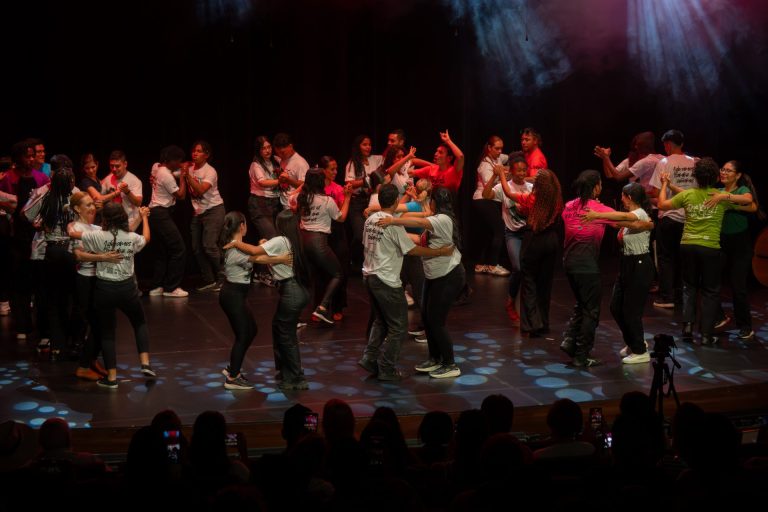
In November 2025, the Global Leaders Institute and Comfama co-hosted The Art FWD Summit in Medellín and Jericó. The gathering

Most cultural strategies are optimized for first-order outcomes: attendance, revenue, engagement. These metrics are visible, reportable, and necessary. They are

Nostalgia is often treated as a stylistic trend, but neuroscience reveals a deeper dynamic. Studies show that nostalgic memories enhance

Organizations often optimize for what they can measure. Cost savings are clear. Operational efficiencies are easy to document. Human presence,

Young people are entering a world shaped by rapid technological change and shifting models of work. Yet most education and

Cultural organizations often think about access in geographic terms. If venues are accessible, transportation is available, and programming is attractive,

The limits of amplification In an era defined by amplification, the prevailing assumption is that the most effective stories are

Corporate leaders rarely view the arts as a strategic asset. In the United States, arts and culture receive less than

Across the world, there is a renewed appetite for materials, objects, and experiences that feel rooted in place. Consumers and

Public subsidy has long functioned as the stabilizing force in cultural ecosystems. It absorbed volatility, supported fixed costs, and allowed

Cultural organizations spend significant resources improving programs, enhancing quality, and expanding access. Yet participation often falls for a simpler reason.

Cultural enterprises often equate activity with relevance. More exhibitions, more concerts, more panels, more festivals. Yet cognitive science shows that