
1. What made this feel like the right moment to write Lo—TEK Water?
This felt like the right moment because we are living at a threshold—ecological, cultural, and technological—where the consequences of extraction-based thinking are no longer abstract, and water crises are revealing systemic fragilities across the globe. At the same time, there is a growing recognition that Indigenous knowledge systems are not relics of the past, but living, adaptive frameworks. This is also a moment when ancestral innovation is evolving through co-design between Indigenous and non-Indigenous designers and scientists—grounded in reciprocity rather than extraction—and these knowledge bases are now forming the foundation of some of the most impactful climate- and water-urbanism projects across cities and landscapes worldwide. Lo—TEK Water emerges from this convergence: an urgency to shift from control to collaboration, to reframe design as something that listens as much as it builds, and to chart the rise of a new evolution in ancestral knowledge—hybrids of the ancient and the contemporary—guiding more resilient futures.

2. The book shows water not just as a resource, but as a teacher and design intelligence. What shifts once people begin to see it that way?
When water is understood as a teacher rather than a resource, the relationship becomes reciprocal. It asks us to observe flows, cycles, and thresholds—to design with variability rather than against it. This shift dissolves the illusion of permanence that underpins much of modern infrastructure and begins to supersede the idea of form as fixed function, moving instead toward form as flux. It also challenges the false separation between humans and nature: when water is treated as an enemy to fortify against, we overlook its passive energy and its capacity to act as a collaborator and guide. In doing so, we move away from cities conceived as machines, toward cities understood as living systems—dynamic, adaptive, and rooted in reciprocal exchange with the environments that sustain them.
3. What do Indigenous water technologies reveal about the limits of how modern systems tend to think?
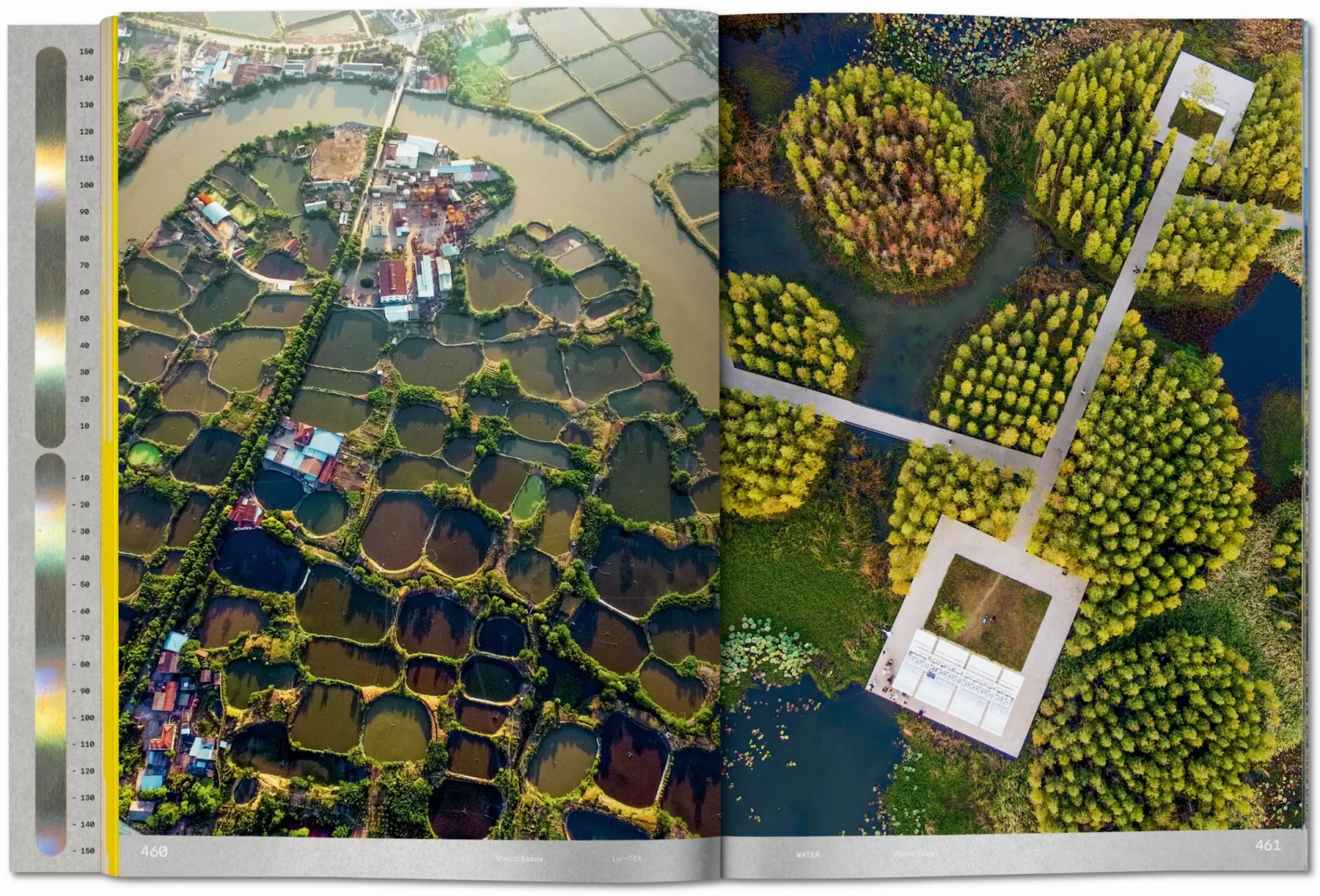
Indigenous water technologies reveal that modern systems often operate within a narrow bandwidth of thinking—one that prioritizes efficiency, control, and short-term outputs. In contrast, these systems are culturally responsive and place-based, grounded in deep understandings of natural systems, weather patterns, and symbiotic relationships. They demonstrate that resilience comes not from dominance over nature, but from alignment with it, working from the base of a system upward to enable regenerative, often exponential benefits for many. In doing so, they challenge models that prioritize maximized output and economic gain for a few at the expense of broader ecological and social well-being. These technologies expose the limits of linear thinking by offering cyclical, regenerative frameworks that modern systems have largely overlooked or dismissed.
4. What kind of attention did this book ask of you that contemporary life often pulls us away from?
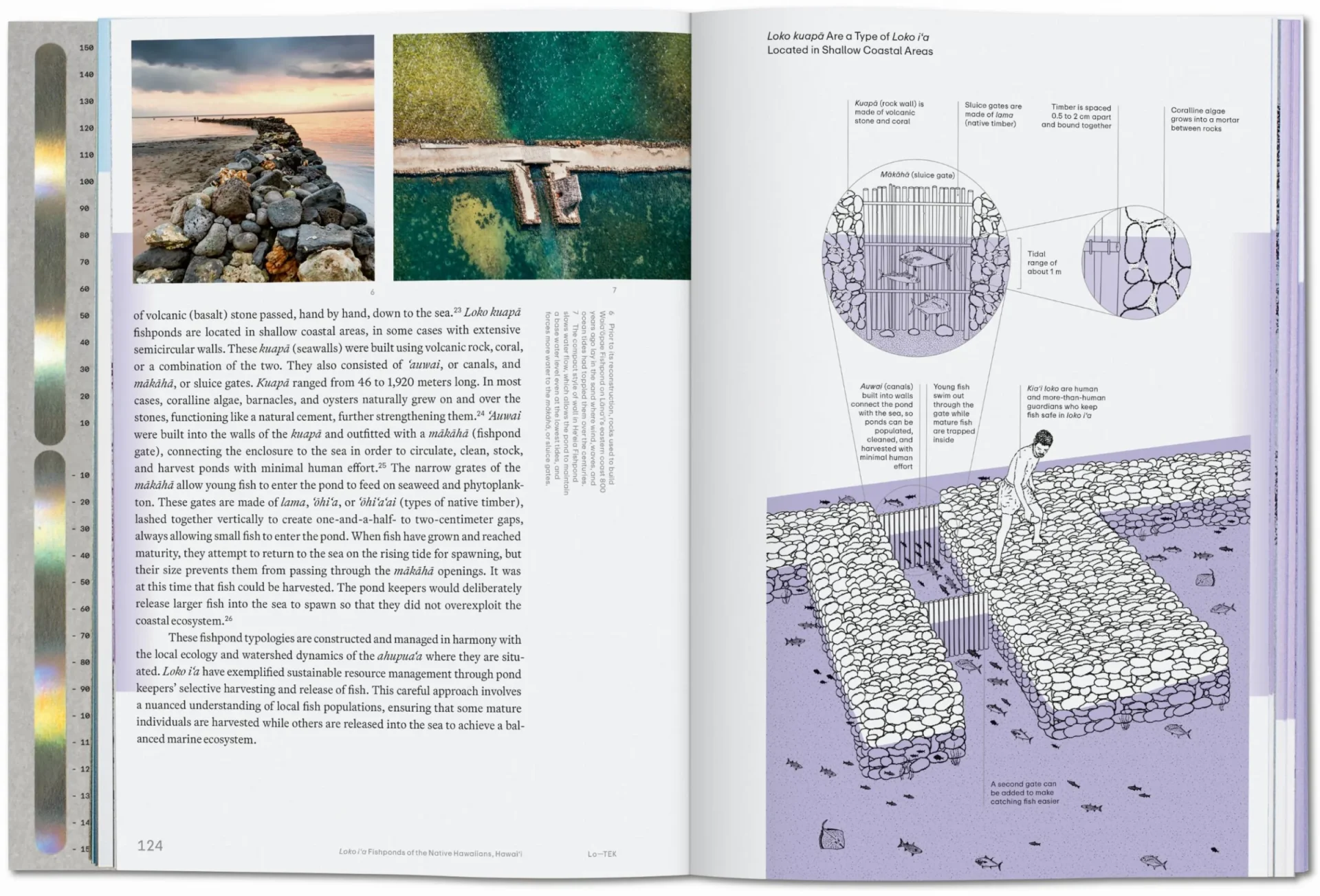
This book required a different tempo of attention—one that resists the acceleration of contemporary life and is rooted in collaboration. With over 150 collaborators and co-authors, it demanded sustained care and coordination—ongoing correspondence with knowledge holders first, alongside communities, design firms, experts, universities, and a wide network of advisors. It meant sitting with complexity and resisting the urge to simplify or extract, allowing understanding to emerge over time rather than be imposed. That kind of attention is increasingly rare, yet it is essential if we are to engage meaningfully with the systems that sustain life—an attention grounded in care, patience, reciprocity, and collective authorship.

5. What is one lesson from your journey into this subject that any creative can carry into their work and life?
One enduring lesson is to design from a place of relationship rather than from a place of authorship. Creativity begins with listening—an attunement to the intelligence already present in landscapes, materials, and communities—and grows through reciprocity. It is about working with, rather than imposing upon, and understanding that innovation often comes from amplifying existing systems rather than inventing anew. This approach shifts the creative’s role from sole author to collaborator within a larger living system, fostering more resilient, inclusive, and responsible outcomes.
ABOUT JULIA WATSON

Julia Watson is a designer, writer, and founder of the Lo-TEK Institute. Watson’s work reframes Indigenous and traditional ecological knowledge as advanced climate technology.
Her new book, Lo—TEK Water, explores how design can reshape humanity’s relationship to one of its most essential resources.
Instagram | www.juliawatson.com | @juliawatsondesign
Book | Lo—TEK Design by Radical Indigenism
Book | Lo—TEK Water A Field Guide for TEKnology
Lo—TEK Office | Re-indigenizing Design & Science for Regenerative Futures
Lo—TEK Institute | Lo—TEK Living Curriculum and Digital Database
TED Talk | How to Build a Resilient Future Using Ancient Wisdom
2024 ASLA Call to Action | Co-create a Future to Heal Land and Culture