In 2005, at a community art workshop on Mornington Island, Australia, Mirdidingkingathi Juwarnda, known to the art world as Sally Gabori, began painting. She was 81. Across the canvas, she placed colors and shapes that recalled the island where she had grown up, a homeland her community had been forced to leave decades earlier. An extraordinary artistic career was underway.
We tend to imagine an artist’s journey beginning with early talent, formal training, and years of practice. Even the expression “emerging artist” often suggests someone young. Gabori’s story invites a different question: what happens to creative potential when someone discovers a new medium at an age when most professional trajectories are assumed to be complete?
She is far from the only artist whose career began remarkably late.
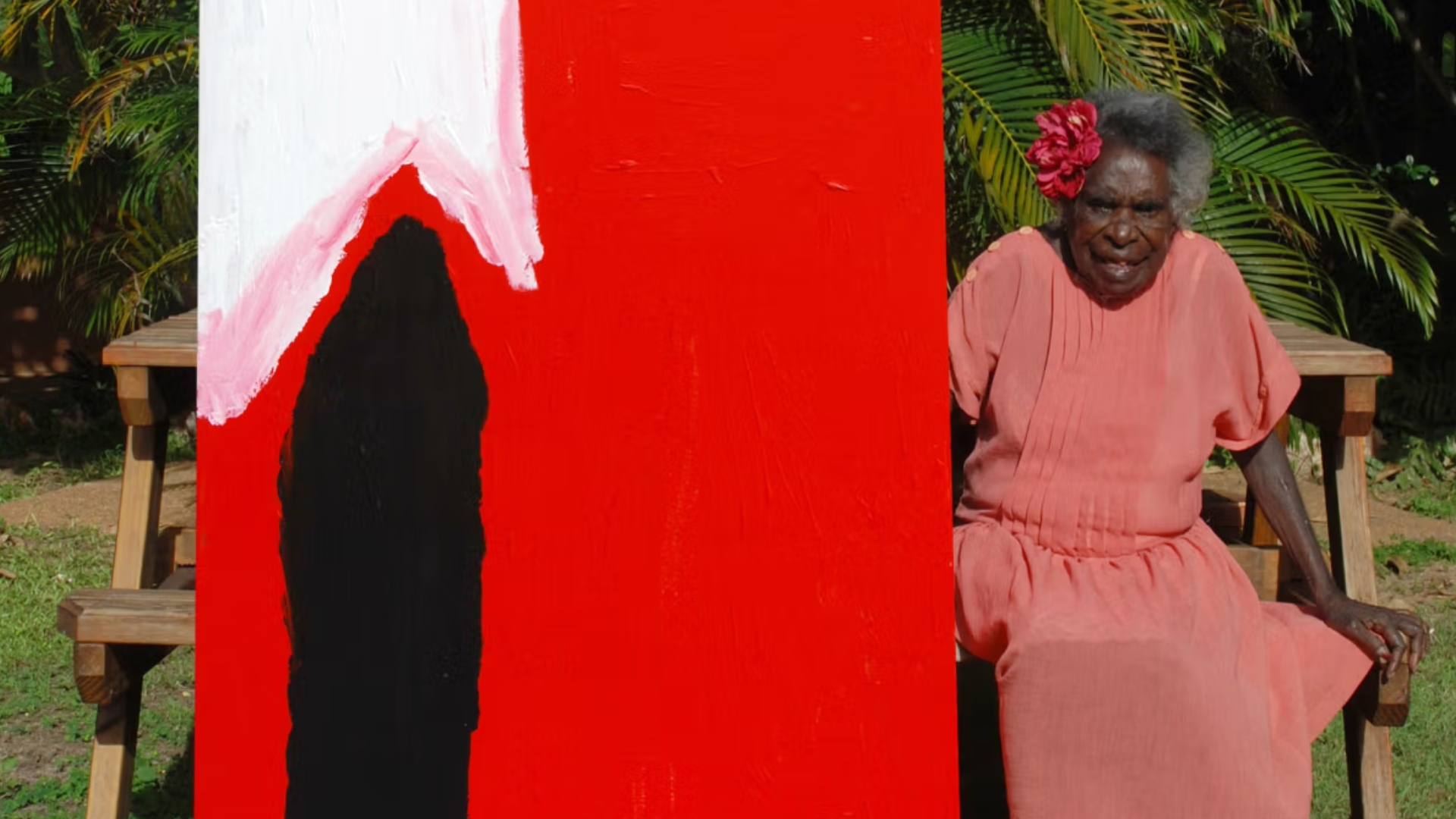
SALLY GABORI: A HOMELAND IN COLOR
Gabori belonged to the Kaiadilt people of Bentinck Island, off northern Australia. Her Kayardild name, Mirdidingkingathi Juwarnda, identifies her birthplace, Mirdidingki, and her totem, the dolphin. The name Sally Gabori came from the European naming conventions imposed by missionaries after her community’s relocation in 1948.
Already skilled in traditional weaving, she began painting at Mornington Island Art in 2005. Her work developed into expansive fields of pink, red, white, blue, and yellow, evoking places, relationships, and memories of Kaiadilt Country. By 2007, she was painting on canvases several meters across.
In just nine years, she created almost 2,000 works and became one of Australia’s most celebrated contemporary artists. In 2022, seven years after her death, the Fondation Cartier in Paris presented her first major solo exhibition outside Australia.
Her paintings arrived late in life. The world that gave them meaning had been with her all along.
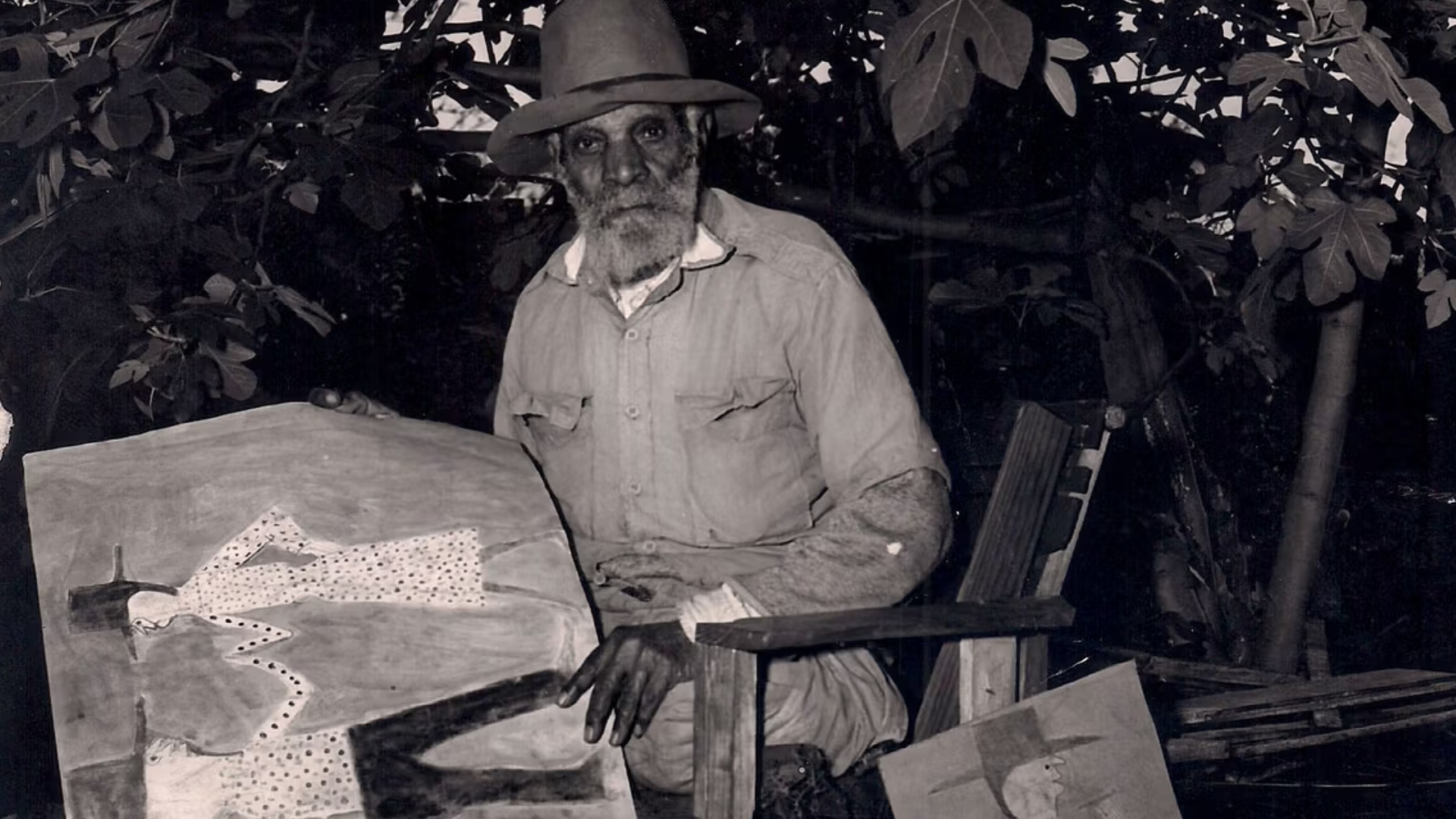
BILL TRAYLOR: A LIFE RECORDED ON CARDBOARD
Around 1939, an older man began drawing on scraps of cardboard while sitting on the sidewalks of Montgomery, Alabama. Bill Traylor was about 85. Born into slavery, he had spent decades working on farms before moving to the city, where he lived in precarious conditions.
With pencil and later paint, he began making spare, striking images of animals, human figures, confrontations, and everyday scenes. Some referred to the life unfolding around him; others reached back into memory. His simplified silhouettes carried a complicated history of enslavement, emancipation, segregation, and life in the American South.
Over a few years, Traylor produced more than a thousand works. Many are now held by major American museums, and in 2018 the Smithsonian American Art Museum organized an extensive retrospective of his work.
Traylor had lived through extraordinary historical transformations before finding a visual language to record his perspective on them.

KIMIKO NISHIMOTO: A CAMERA AND A SENSE OF HUMOR
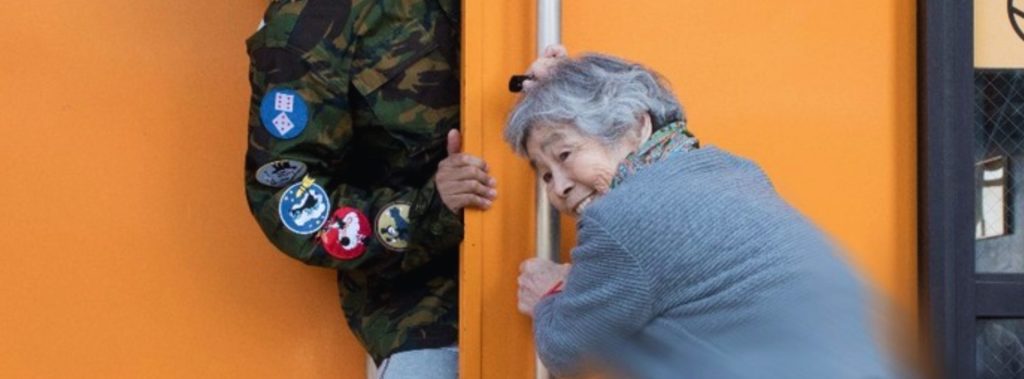
In Japan, Kimiko Nishimoto was 72 when she joined a photography class taught by her son. She had worked as a beautician and professional bicycle racer before raising a family. She joined the class partly to meet people, and soon began experimenting with a camera and digital editing.
Her photographs are wonderfully mischievous. In one, she appears to be speeding beside a car while clutching a walker. In others, she stages improbable costumes and comic situations, playing with expectations about how an older woman should behave or appear.
Nishimoto held her first solo exhibition at 82. Her playful self-portraits later traveled widely online and drew international attention, including a major exhibition in Tokyo in 2017.
What began as a social activity developed into a distinctive creative practice, full of humor, performance, and technical experimentation.
WHO GETS TO BEGIN?
These careers followed very different paths. Gabori found a visual language for memories of her homeland. Traylor translated a lifetime of observation into images. Nishimoto discovered the pleasure of inventing and laughing at herself.
What connects them is the opportunity to begin: an art workshop, scraps of cardboard, a photography class.
Their stories also expose a blind spot in how cultural institutions identify and support talent. Fellowships, training programs, and emerging-artist opportunities often follow assumptions about when an artistic career is supposed to start.
For cultural leaders, this raises a practical question: where are the opportunities for someone who wants to begin making art at seventy or eighty?
The next remarkable artist may be someone who has yet to make a first work. Whether we ever encounter that work depends in part on who gets invited to begin.
Register for the chance to be invited to apply to The Global Arts MBA