Creative work is often discussed in terms of form, composition, narrative, image, or idea.
But before we interpret any of those things, we encounter matter.
Stone has weight. Fabric folds. Metal reflects. Gold carries centuries of associations. Discarded objects arrive with traces of previous lives.
Materials can create tension, carry history, alter perception, and influence what a work communicates before we have consciously interpreted it.
Think of the same chair made from plastic, marble, cardboard, or velvet. The silhouette could remain identical. Yet each version would suggest something different about permanence, value, comfort, fragility, labor, or use.
For creators, choosing what something is made of can become part of choosing what the work means.
MATERIAL AS CONTRADICTION
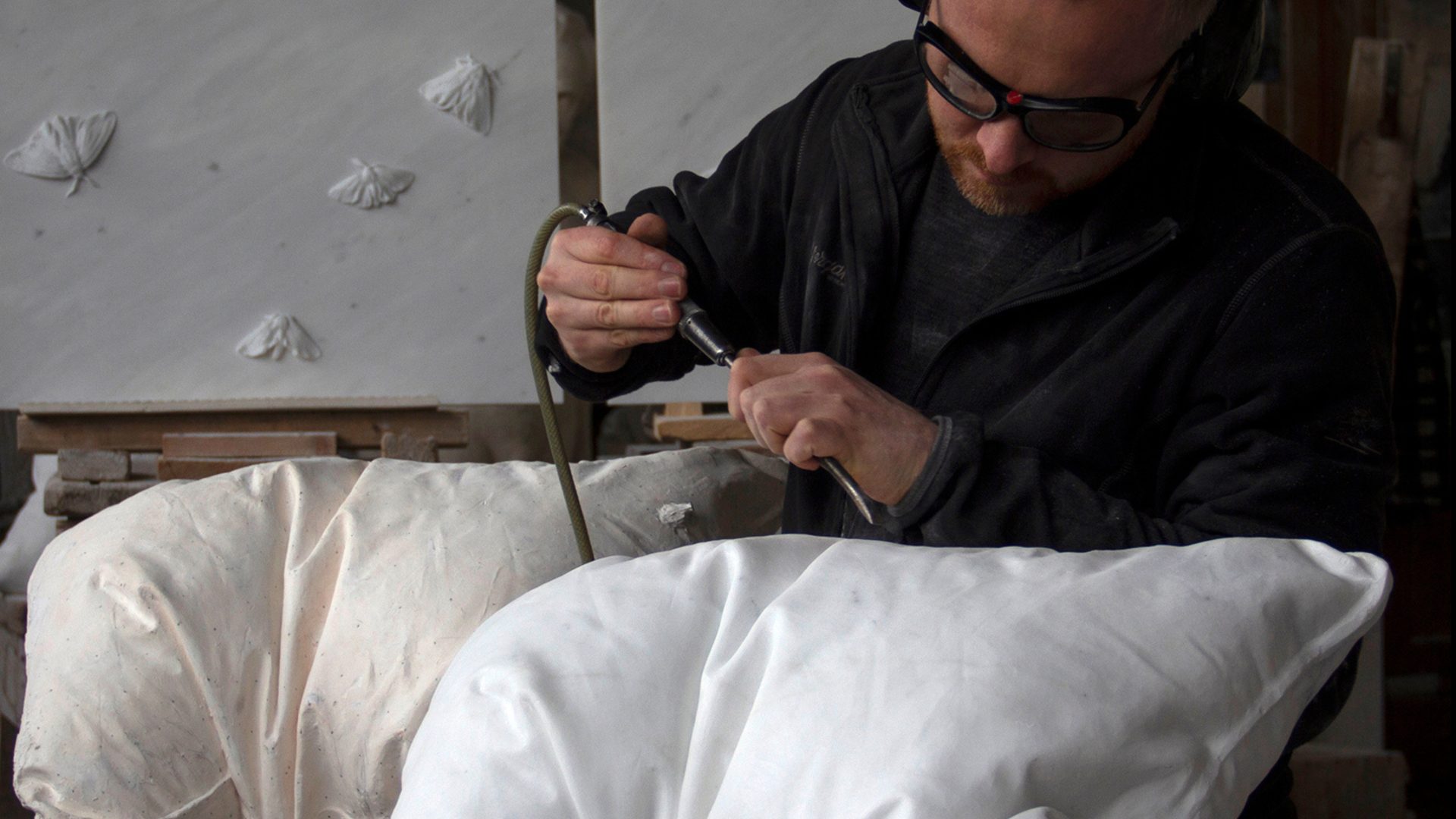
Håkon Anton Fagerås, Down
Norwegian sculptor Håkon Anton Fagerås carves pillows from marble.
The effect is immediate. The eye sees softness: folds, indentations, a surface that seems to yield under weight. The body knows marble as cold, heavy, and resistant.
That contradiction creates much of the work’s charge. Fagerås has described fragility and vulnerability as recurring concerns in his practice. The pillow also matters to him as an intimate object, present through some of life’s most private moments. Marble introduces another layer. Its translucency can suggest delicacy even while the stone remains physically hard.
The material makes softness more noticeable precisely because softness is impossible.
MATERIAL AS HISTORY
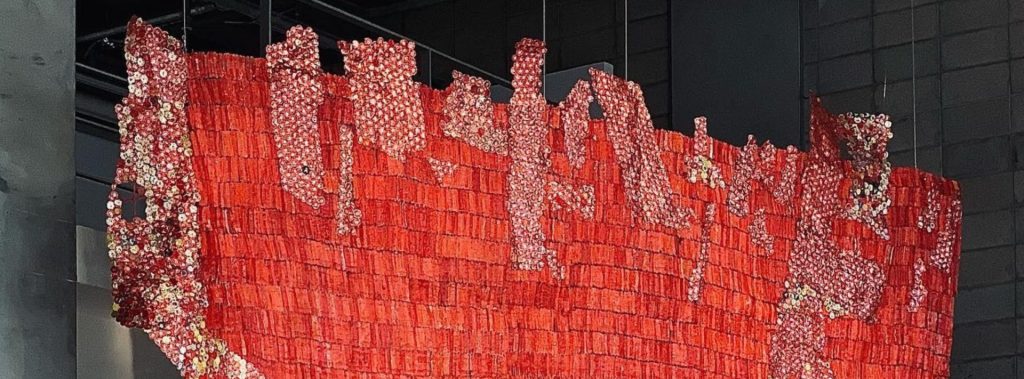
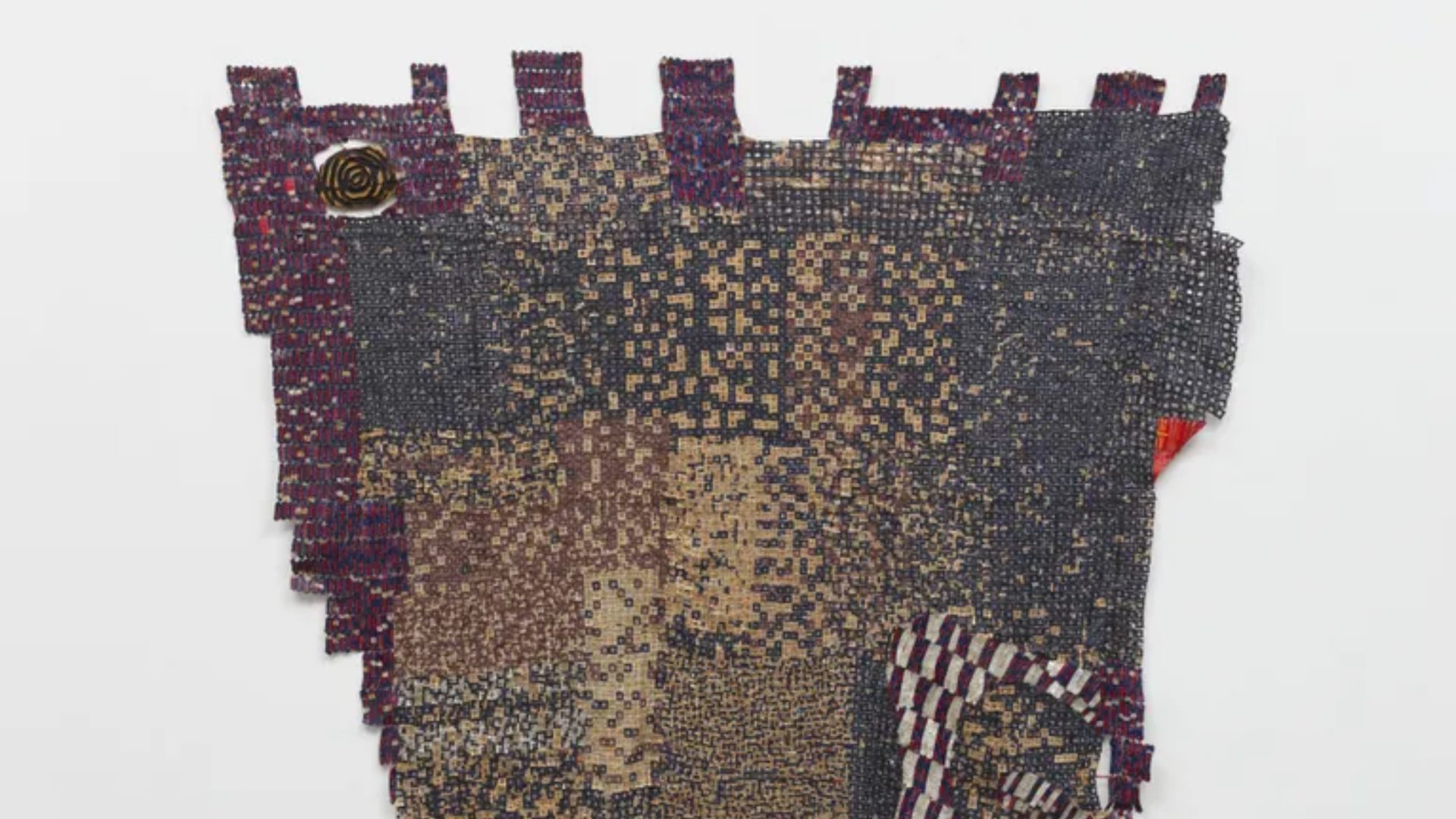
El Anatsui, metal textiles
El Anatsui creates vast, flexible surfaces from thousands of discarded aluminum bottle caps, flattened, cut, and connected with copper wire.
From a distance, the works can resemble luxurious woven cloth. Up close, their industrial origins remain visible.
Anatsui grew up in Ghana in a family connected to Ewe kente weaving, and his metalwork echoes the structure and visual language of West African textiles. The bottle caps bring other histories with them: alcohol, consumption, waste, trade, and the long movement of goods between Africa, Europe, and the Americas. The Metropolitan Museum connects these works to both kente traditions and histories in which liquor and textiles circulated throughout West Africa.
The material carries several stories at once. Discarded metal becomes something resembling cloth. Contemporary waste encounters cultural memory. A material associated with consumption acquires monumentality.
Changing the material changes what the work can hold.
MATERIAL AS TRANSFORMATION
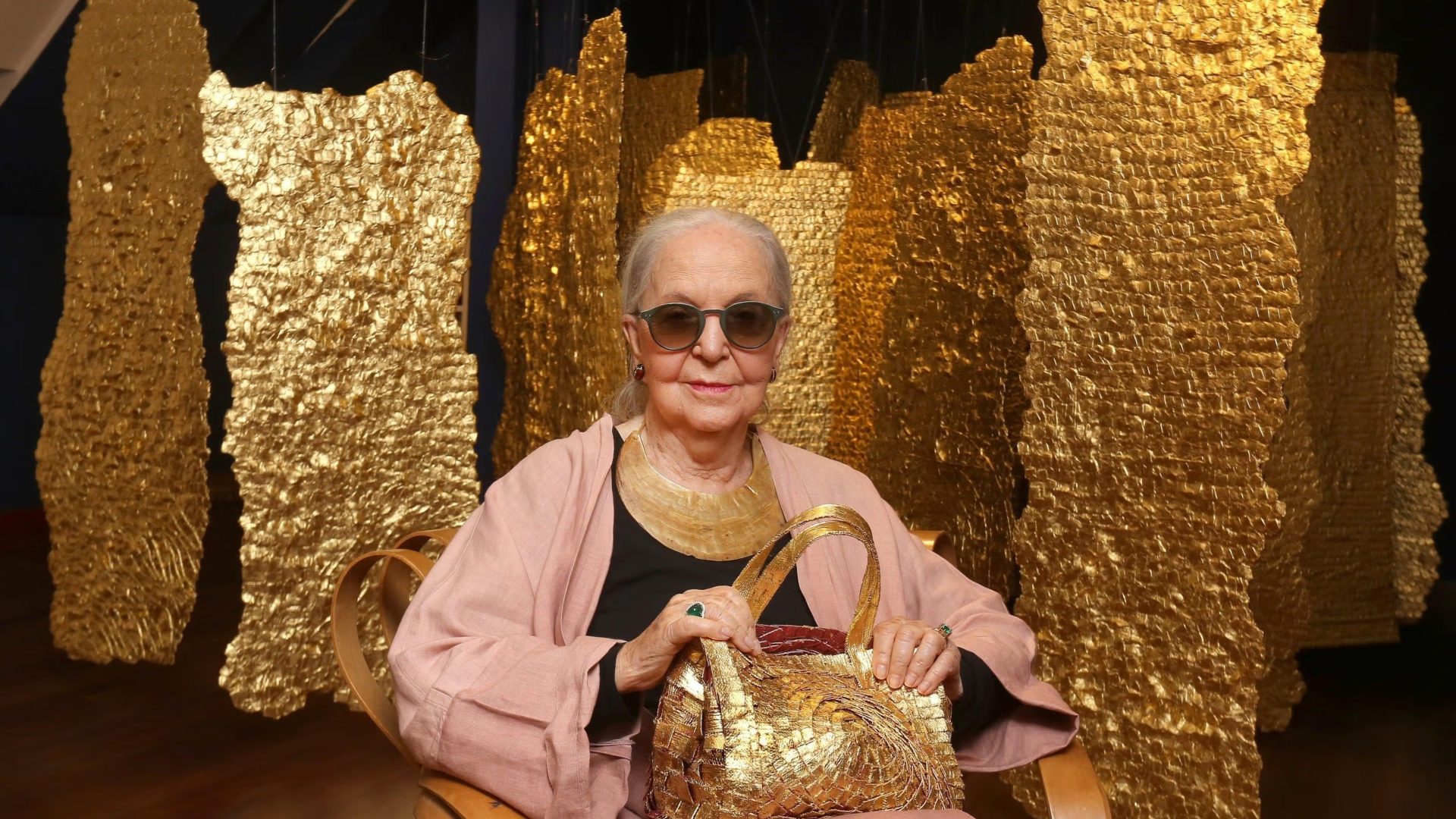
Olga de Amaral, Alquimias
Colombian artist Olga de Amaral began incorporating gold leaf into her woven work in the 1970s.
She described her intention as turning textiles into “golden surfaces of light.”
The change is profound. Woven fiber carries associations with touch, flexibility, labor, and the handmade. Gold leaf catches light and changes the way the object occupies the room. De Amaral’s textiles can begin to feel architectural, monumental, almost sacred.
Her work also draws from the visual world of Colombia: landscape, adobe architecture, tiled roofs, and the golden surfaces of Baroque churches. In the Alquimia series, linen and cotton are combined with materials including gesso, paper, pigments, and gold leaf until textile begins to behave almost like another substance altogether.
Gold changes how we read the fiber.
The material transforms the object’s category.
WHAT THE MATERIAL ALREADY KNOWS
Creators often begin with questions of subject and form.
What are we making? What should it look like? What should it communicate?
Material deserves to enter that conversation earlier.
Every material arrives with physical properties, cultural associations, histories of use, and expectations. Those qualities can reinforce an idea, complicate it, contradict it, or introduce meanings the creator did not need to explain explicitly.
Fagerås uses marble to make softness uncanny.
Anatsui allows discarded metal to carry histories of cloth, trade, and consumption.
De Amaral uses gold to move fiber toward light, architecture, and the sacred.
In each case, the material participates in the idea. That opens a different kind of creative question. Instead of asking only What form should this take?
We can also ask: What should this be made of, and what will that choice say before I say anything else?
Register for the chance to be invited to apply to The Global Arts MBA