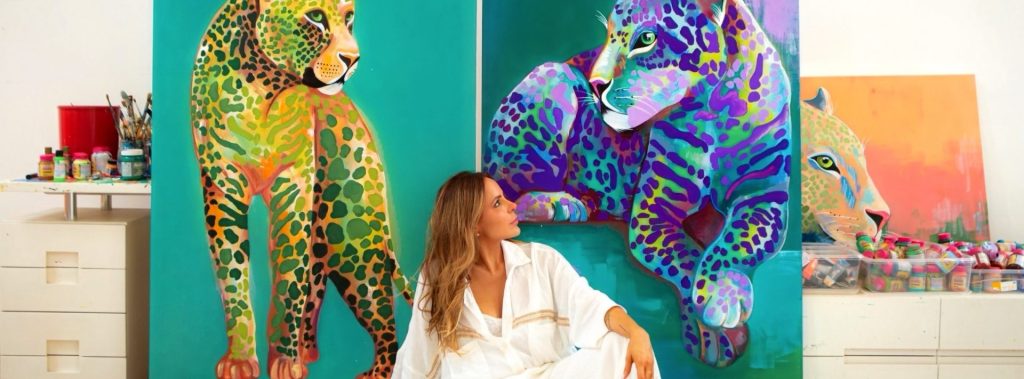
1. Your work hits first through color, scale, and animal presence. How did that visual language become yours?
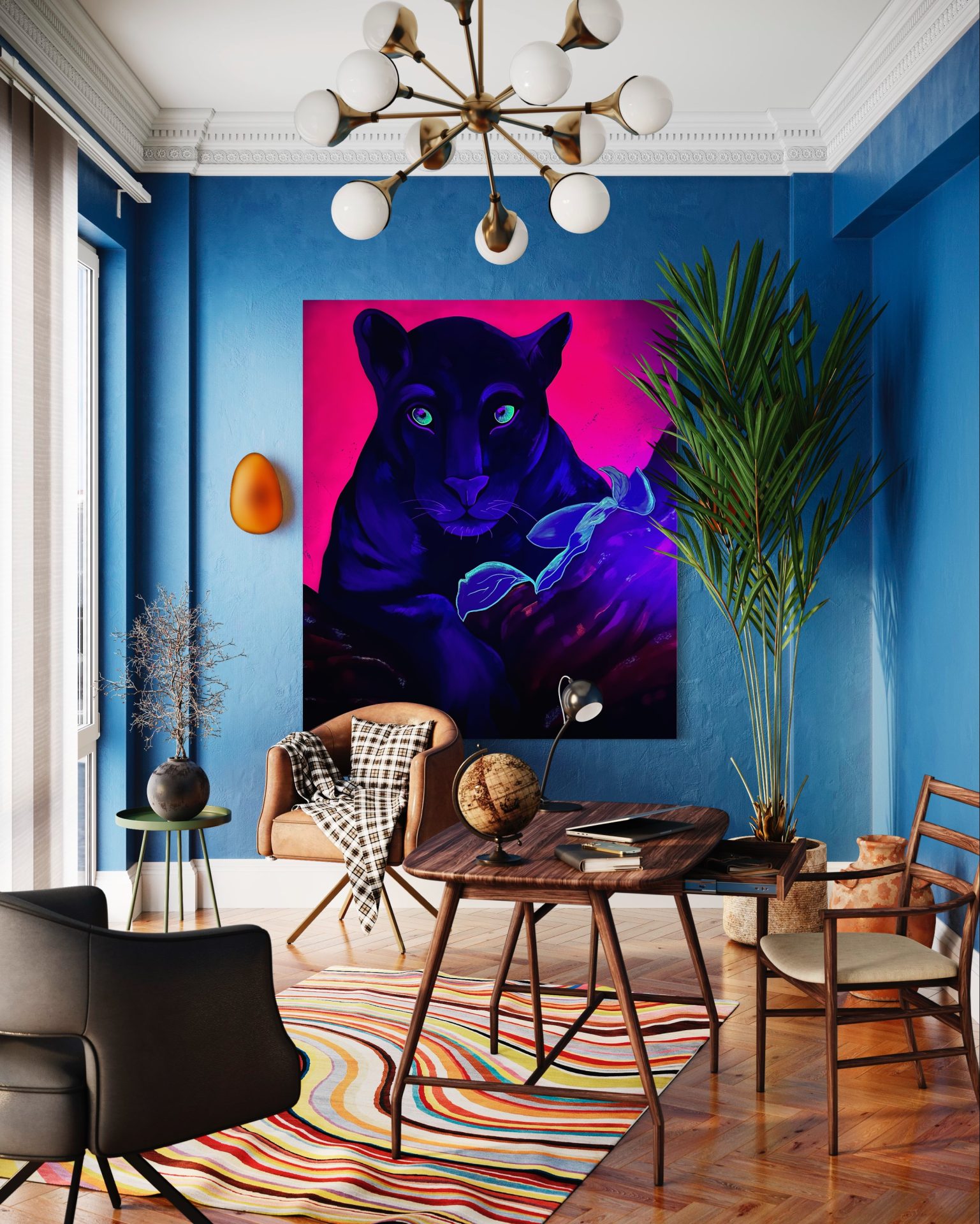
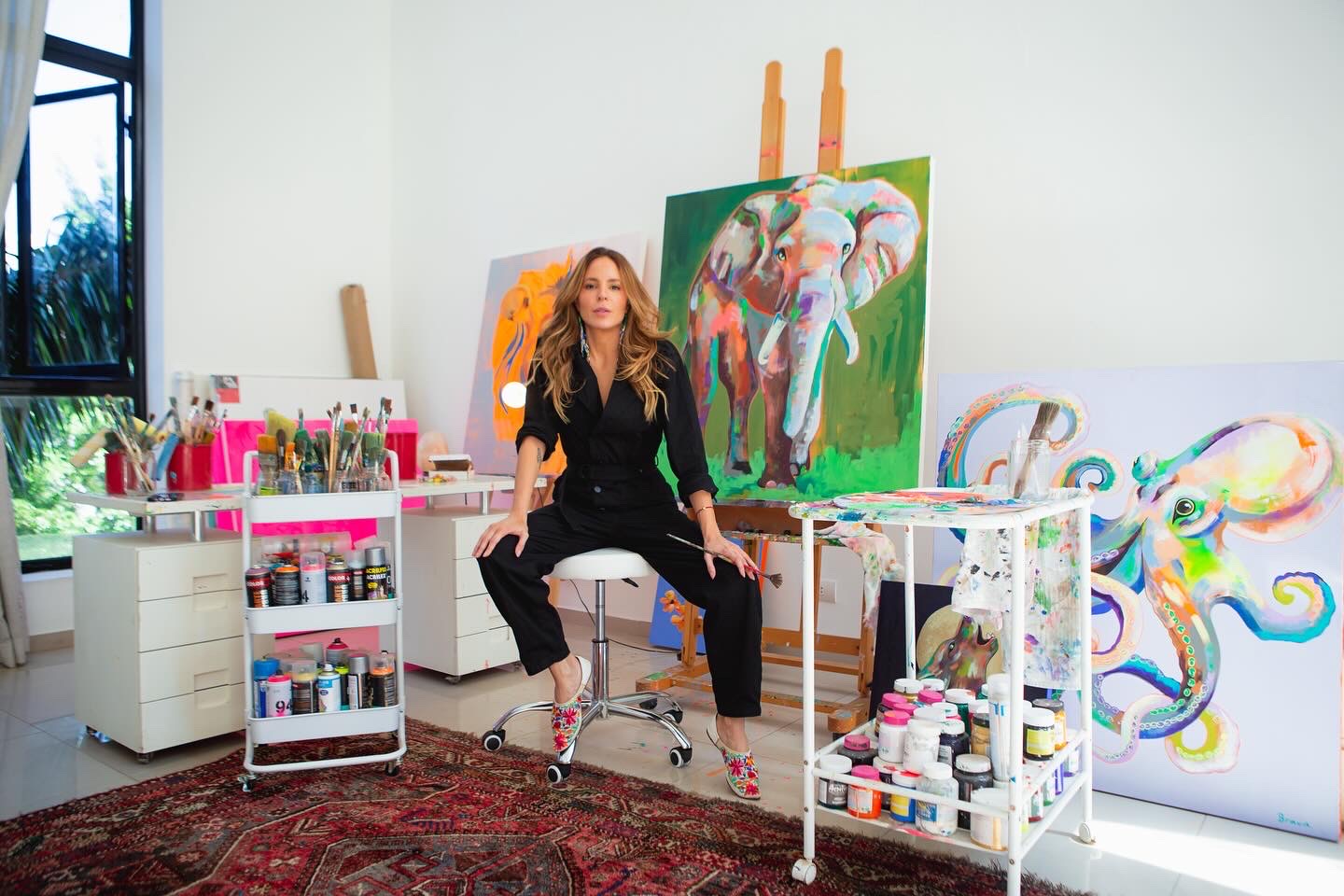
My visual language came very intuitively at first. Color was always emotional for me, a way to transmit energy before words even existed. Growing up in Brazil, nature never felt subtle. Everything felt alive, intense, vibrant, almost spiritual. Over time, animals became increasingly present in my work because they carry a raw truth that humans often disconnect from. I started painting them larger than life because I wanted people to feel confronted, mesmerized, and emotionally connected at the same time. The scale, the neon colors, the movement, it all became my way of creating an immersive emotional experience rather than simply an image.
2. Why wildlife? What keeps pulling you back to animals as the central force in the work?
Wildlife keeps pulling me back because animals represent something pure and essential. I’m also vegan, and that philosophy deeply influences my work and my view of life. For me, painting animals is about creating connection and empathy, reminding people that humans are not separate from nature, but part of the same living ecosystem. Everything is connected through symbiosis: animals, forests, oceans, humans, and energy. When one part suffers, the whole system feels it. Through my art, I want people to reconnect with that awareness emotionally, not through judgment, but through fascination, beauty, and presence. Many of the species I paint are incredibly powerful yet vulnerable due to human impact. If people emotionally connect to animals, they begin to care about protecting them and the ecosystems we all depend on.
3. Your work carries Brazil’s intensity but lives in Miami’s global art scene. How have those two worlds shaped the way you see nature?
Brazil gave me emotional intensity, spirituality, biodiversity, and a visceral connection to nature. Miami introduced me to a global audience and showed me how art can become part of a broader cultural conversation. Brazil taught me to feel nature. Miami taught me how to amplify the message internationally. Living between those worlds shaped the duality in my work: it is both wild and contemporary, emotional and immersive. Being part of the international art scene also made me realize that environmental issues are no longer local; they are global, collective, and urgent.
4. A lot of environmental art begins with a warning. Yours begins with attraction. Why lead with beauty?
I believe beauty opens doors that fear often closes. People are already overwhelmed by the alarming information they receive every day. I wanted my work to create attraction first, to hypnotize people into looking closer. Once they are emotionally engaged, deeper conversations can happen naturally. Beauty creates connection, and connection creates care. For me, art becomes powerful when it touches people emotionally before intellectually. I want viewers to feel wonder, fascination, and even transcendence, because protecting nature should not come only from guilt or fear, but also from love, respect, and admiration for the living world we are part of.
5. When did the work stop being just paintings and become a larger platform for the planet, collectors, and public attention?
I think there was a moment when I realized people were not only collecting my paintings but also connecting to a larger purpose behind them. Conversations began to expand beyond aesthetics into conservation, veganism, spirituality, biodiversity, and humanity’s relationship with nature. Collaborations with nonprofits, public projects, collectors, and international audiences made me understand that the work had become a platform. Art has the ability to move emotionally across cultures and languages, and I began embracing that responsibility more consciously. Today, I see my work as both artistic expression and activism, a way to keep wildlife emotionally present in a world that is increasingly disconnected from nature and from the understanding that we are all interconnected.
ABOUT FLÁVIA BRAUN
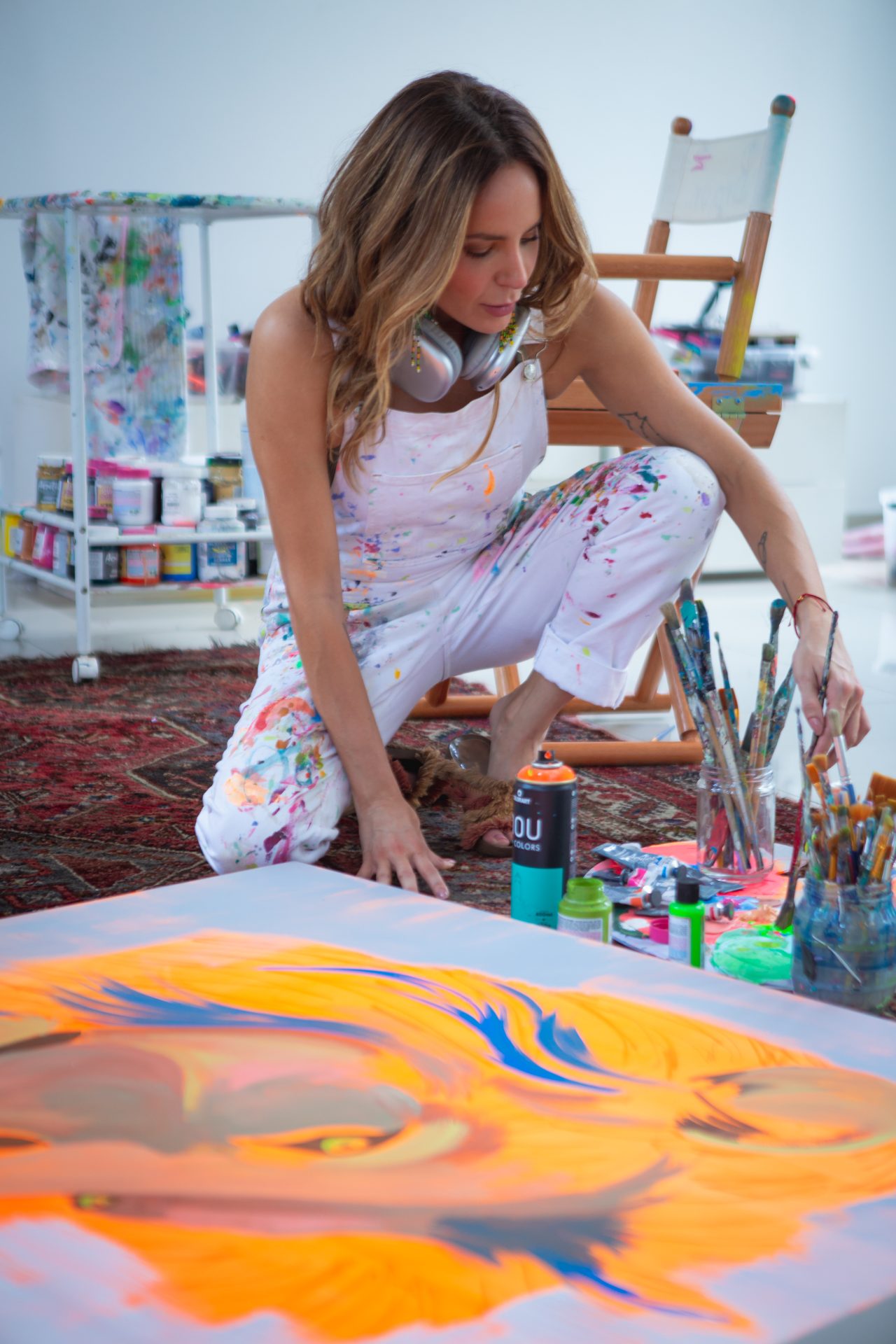
Flávia Braun is a São Paulo-born painter, illustrator, and designer whose work weaves together vivid color, animal advocacy, and the bold visual energy of contemporary fine art. Each of her pieces draws attention to causes like cruelty-free consumerism and animal rights through a distinctly high-vibrational aesthetic.