Some cultural movements grow through leadership. Others grow through traces.
A person leaves a mark, a prompt, a model, a small intervention, a visible rule, or a simple object in public. Someone else sees it and understands what can happen next. The action becomes legible. Participation becomes easier. The idea begins to travel.
This is the useful insight behind stigmergy.
The term comes from biology. French entomologist Pierre-Paul Grassé introduced it in 1959 to explain how insects coordinate complex construction through traces left in their environment. One action changes the surroundings. That change stimulates the next action. Over time, a larger structure emerges without a central plan directing every move.
For cultural leaders, the concept is valuable because many cultural projects still assume that growth depends on control. A team designs the full system, launches the program, manages participation, and tries to direct the outcome.
The Trace Method works differently. It asks what kind of mark, object, prompt, template, or visible example can help people continue the work themselves. The leader designs the trace. The community builds from it.
This matters for artists, cultural organizations, urbanists, educators, and creative entrepreneurs. Participation often becomes more powerful when people can see exactly how to enter. A blank invitation can feel too open. A strong trace gives people enough structure to act.
A chalk prompt. A parking space turned into a park. A small library box on a street corner. Each one says, “This is possible, and you can add to it.”
MODELS IN PRACTICE
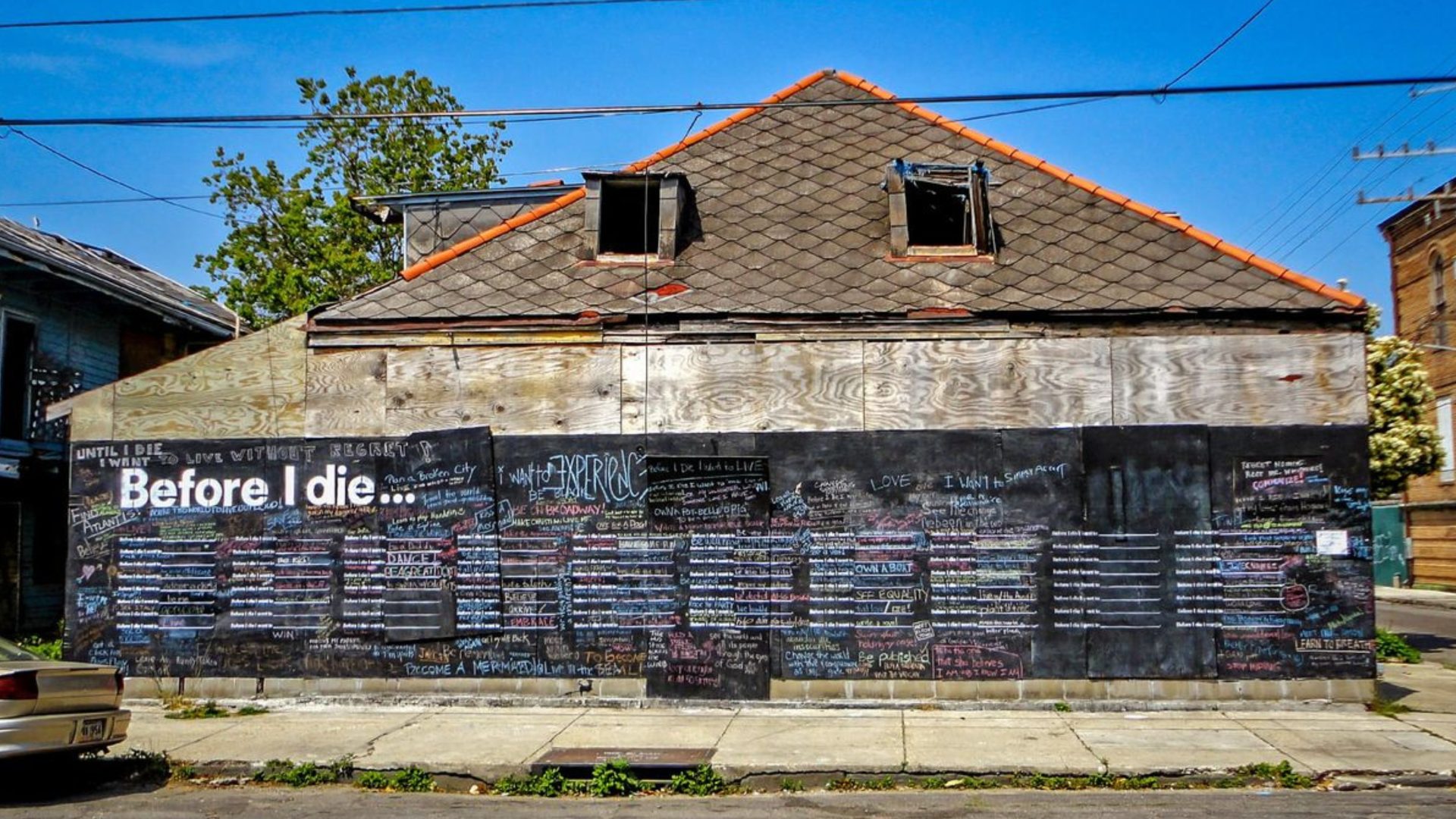
Before I Die, Candy Chang
Candy Chang’s Before I Die began in New Orleans in 2011, after the death of someone she loved. She painted the side of an abandoned house with chalkboard paint and stenciled the phrase: “Before I die I want to ____.”
By the next day, the wall was full.
The project’s power came from the trace. The sentence gave strangers a clear action. Each response made the next response easier. Chang later created a toolkit so others could make their own walls. The project has since appeared in thousands of communities around the world.
A wall became a prompt. A prompt became a ritual.
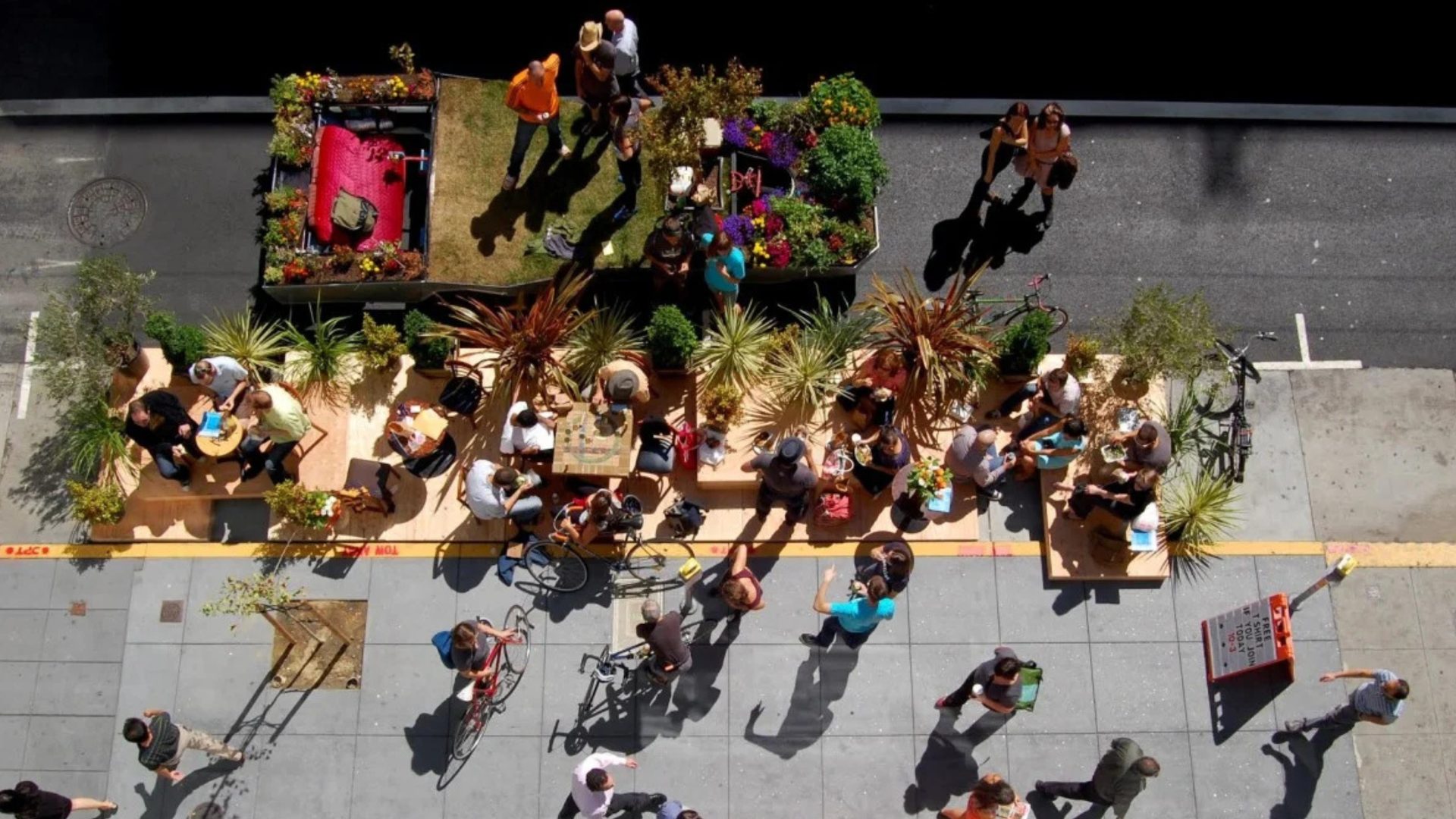
PARK(ing) Day, San Francisco and beyond
PARK(ing) Day began in 2005 when the Rebar design team turned a metered parking space in San Francisco into a temporary public park with grass, a tree, and a bench.
The intervention was small, but the trace was clear. A parking space could briefly become a public place.
The format spread because others could copy the logic. Around the world, people began transforming curbside parking spaces into temporary parks, installations, gardens, gathering places, and social spaces. A single act of urban improvisation became a visible instruction.

Little Free Library, global
Little Free Library works through an object anyone can understand: a small book-sharing box placed in public view.
The rule is embedded in the form. Take a book. Leave a book. Return later. Add something for someone else. The library itself becomes a social trace, signaling generosity, trust, and shared literacy at the neighborhood scale.
Today, the organization offers a world map and mobile app that help people find little libraries, get directions, save favorites, and track the ones they visit. Each box remains local, but the trace travels globally.
DESIGNING THE TRACE
The Trace Method helps explain why some cultural ideas spread without heavy management.
They leave behind something people can read.
For cultural organizations, this is a strategic shift. The question is not only how to gather people around a program. The question is what evidence of participation remains after the program is over.
Can others see what happened?
Can they understand how to join?
Can they repeat, adapt, remix, or extend the gesture?
Can the project leave a visible invitation behind?
This does not mean abandoning leadership. It means leading through marks that make further action possible.
Some cultural projects require direction, funding, institutions, and infrastructure. Others need a well-designed trace: simple enough to understand, open enough to continue, and visible enough for someone else to pick up.
Culture does not always spread through campaigns. Sometimes it spreads through a clue left in public.
Register for the chance to be invited to apply to The Global Arts MBA