
How Design Thinking helps the creative process
How can design thinking help the creative process? Design thinking can help the creative process by providing a structured and human-centered approach to solving problems. Design thinking is based on five stages: empathize, define, ideate, prototype, and test. 1) Empathize: This stage involves studying the values, needs, and challenges of users or audiences. It requires […]
Emerging technology for arts innovation

In the GLI’s “Emerging Technologies for Innovation” Substream curated by Aliena Haig (Academy for Impact through Music), fellows explore applying technological solutions to arts, education, and career development challenges. This is examined through first-hand conversations with industry leaders ranging from Muvak — an innovative digital hiring and collaboration platform, to OAcademy — the global music […]
Behind the Tide: Miami Music Project’s Anna Klimala
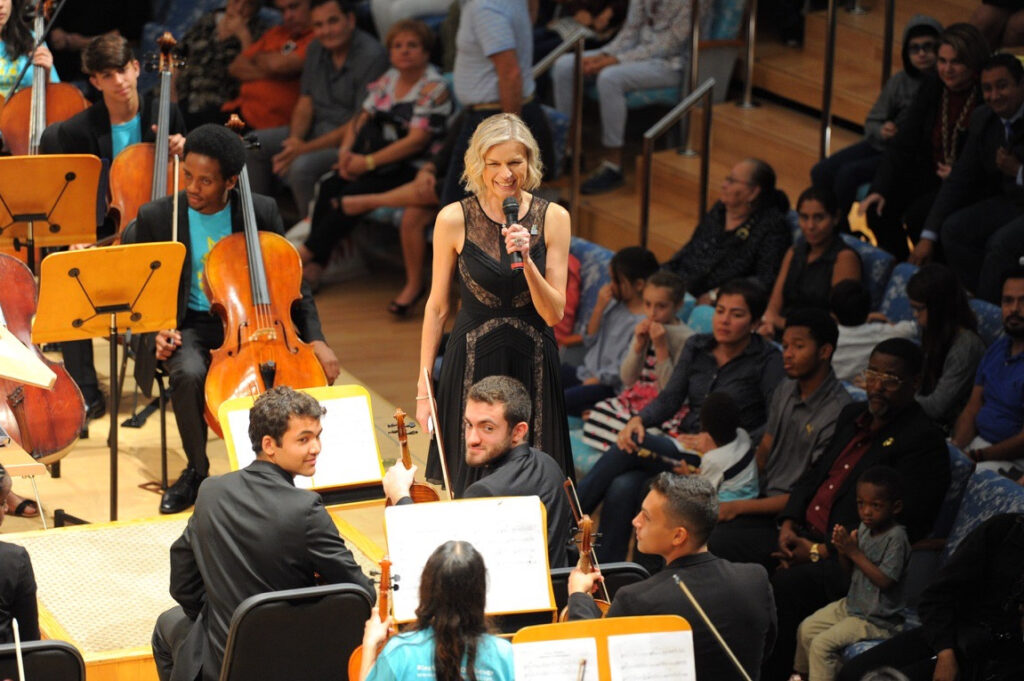
Arts executive, music educator, double-bassist, and activist Anna Klimala works to re-establish music’s central place in the development of young people. Since 2009, Anna has been President of Miami Music Project, a non-profit dedicated to bringing social transformation through music to under-resourced communities. Her work today faces unique challenges and opportunities, given the changes Miami-Dade […]
The Reality Pitch: Common fails with Louis Songster

In “Creating Your Pitch” with Module Director Louis Songster (Social Rocket Factory), GLI Fellows practice a range of communication tools, including the “Reality Pitch.” What is a Reality Pitch? It is a pitch stripped bare of superfluous facts and details — focused on essential takeaways. Limited to 3-minutes in length, a Reality Pitch contains three […]
Identifying ethical dilemmas: a sound approach to good

In the GLI’s “Feasibility in Community-Engaged Evaluation,” Module Director Jessica Sperling (Duke University) and the 2023 Cohort explore the ethical design of evaluations. The issue of responsibility is a paramount theme in these sessions, including — 💡How to gather insights into an intended beneficiary community without overpromising solutions. 💡How to evaluate shortcomings within our organizations […]
Evaluation: A systematic approach to impact

In the “Evaluation: Frameworks for Considering Program Impact and Fostering Program Learning” by Jessica Sperling, PhD (Duke University), GLI Fellows explore the field of evaluation to understand its role in arts leadership. Supported by social sciences, evaluation is a form of research study. Evaluation is the systematic inquiry that addresses an initiative’s purpose rather than […]
The Ecological Perspective: Sense from nature’s patterns

In the GLI’s “Ecological Perspective” module led by David K. Hurst FRSA (Hill and Levene Schools of Business at University of Regina), fellows delve into what it means to assess organizational challenges and opportunities in the field. According to Hurst, ecology means a down-to-earth perspective — viewing systems within their context and avoiding abstractions that impede local […]
Artful proposal writing for effective fundraising

In the “Proposal Writing” sessions with Tracy Kaufman of Candid, the 2023 GLI Cohort delves into the world of artful fundraising. Kaufman shows how written proposals stand the best chance by aligning three elements — 1) Financial and impact data that bring to life the credibility of the plan 2) Language tailored to address the values of the prospective funder […]
The difference between good and excellent…

The Global Leaders Institute takes a deep dive into the “Customer Journey” concept under the Brand Management for the Arts module led by Renaud Legoux of HEC Montréal Business School. One of the “Customer Journey” concept’s central themes is engagement. Through case studies focused on the arts, class reading shows how creative organizations can improve engagement by creating […]
Stakeholder personas: eye of the beholder

Professor María Ballesteros -Sola of Cal State Fullerton, College of Business and Economics explores the concept of ‘Stakeholder Personas’ with the GLI Fellows. ‘Stakeholder Personas’ are conscientious representations of stakeholders involved in an enterprise’s activities. Depending on the enterprise, stakeholder personas can range from clients, beneficiaries, participants, and audience members to sponsors, service providers, employees, suppliers, etc. Carefully constructed, […]