
A painting can look more beautiful simply because it is shown in a museum.
In a 2015 experiment, researchers asked 64 participants to evaluate images of modern art and graffiti presented in museum or street settings. Modern artworks received higher ratings for beauty and interest in the museum setting. For graffiti, the change of setting had no comparable effect. The artwork stayed the same. Its surroundings influenced how people judged it.
We tend to think of beauty as something we recognize instinctively. Yet our aesthetic responses are also shaped by what we have grown up seeing, the traditions around us, and the institutions that tell us what deserves attention.
Sociologist Pierre Bourdieu argued that aesthetic preferences are linked to education, social background, and cultural capital. Familiarity with certain forms becomes a marker of refinement; other forms are dismissed as excessive, unsophisticated, or merely decorative. Over time, these distinctions can come to seem natural.
Artists working across different cultural traditions make those invisible rules easier to see.
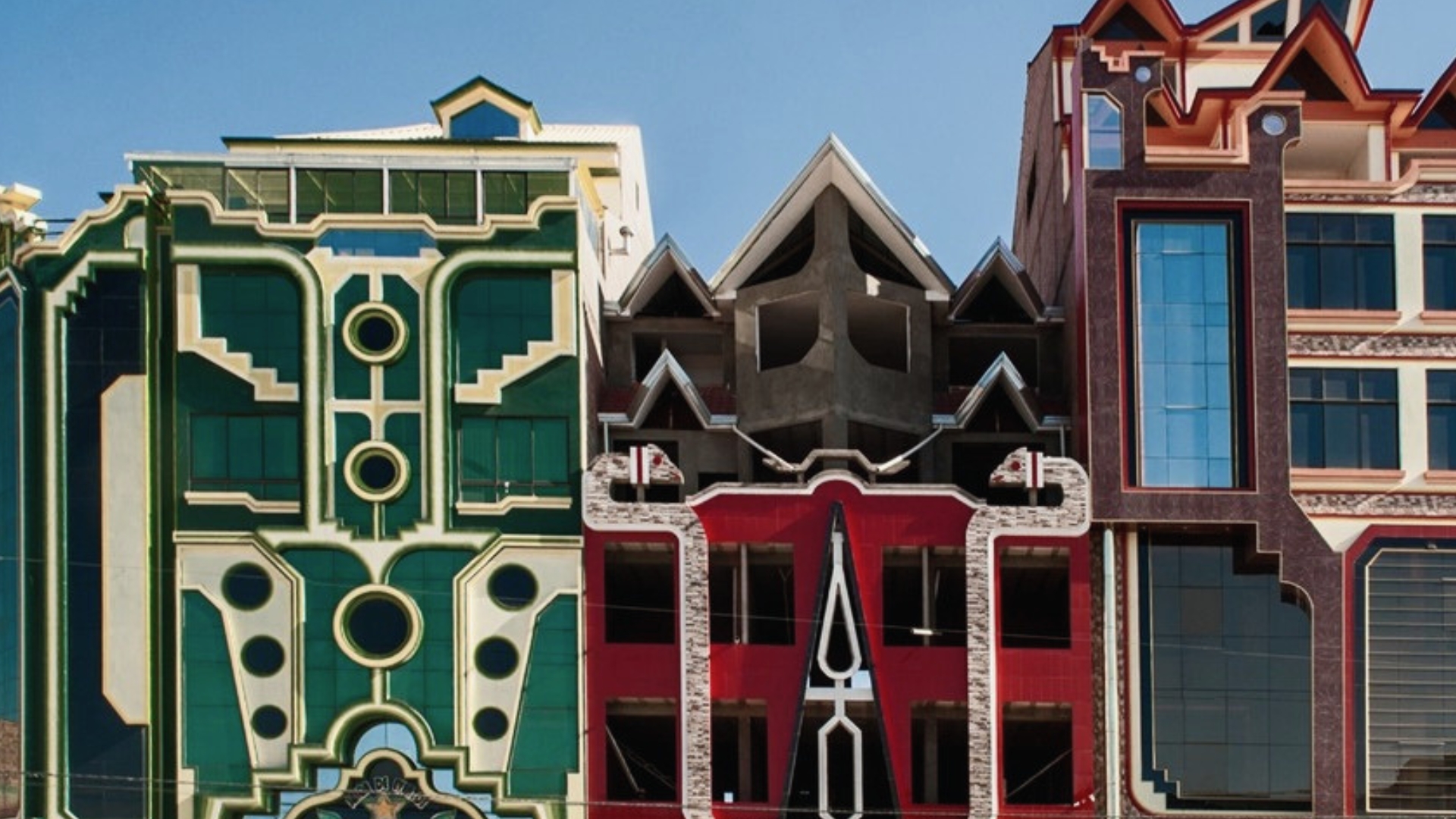
FREDDY MAMANI: THE ARCHITECTURE OF PRIDE
In El Alto, Bolivia, Freddy Mamani has transformed the skyline with brightly colored buildings inspired by Aymara textiles, Tiwanaku geometry, and Andean cultural traditions. His distinctive neo-Andean architecture has become a symbol of the economic rise and cultural pride of the city’s Aymara communities.
Mamani began his career as a bricklayer before studying construction and engineering. His buildings, popularly known as cholets, combine commercial spaces, elaborate celebration halls, and residences. The name itself, a blend of cholo and chalet, was initially considered derogatory by Mamani, who later reclaimed it as an expression of Andean identity.
His work has been criticized as kitsch by some architectural observers, while his clients embrace it as a powerful expression of who they are. Mamani’s buildings challenge the aesthetic conventions that have historically defined architectural sophistication, raising a fundamental question: whose cultural references get to determine what beautiful architecture looks like?
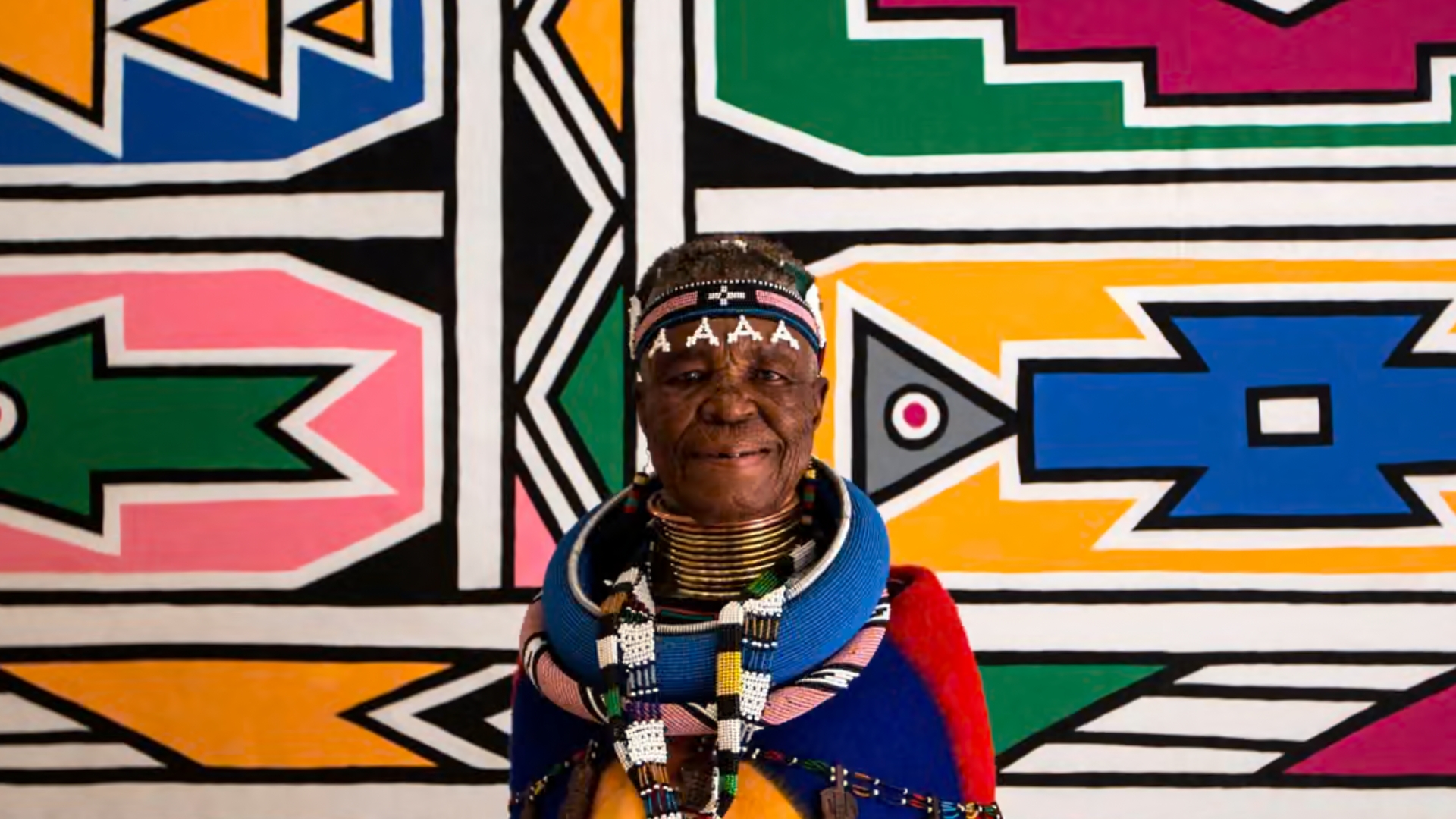
ESTHER MAHLANGU: WHEN THE WALL ENTERED THE MUSEUM
South African artist Esther Mahlangu learned the geometric painting traditions of the Ndebele people from her mother. The bold patterns and colors she developed had long been part of an artistic practice associated with home walls and passed down through generations of women.
In 1989, Mahlangu brought this visual language to the international exhibition Magiciens de la Terre in Paris. Two years later, she became the first woman and first African artist to create a BMW Art Car, transforming a sedan with Ndebele motifs.
The patterns did not need to be reinvented to command the attention of international art institutions. Their presence on a car and in galleries raised questions about the categories through which artistic value is recognized. Why should a visual tradition rooted in domestic architecture have to enter a museum before it receives the status of art?

GUO PEI: ONE DRESS, MANY READINGS
At the 2015 Met Gala, Rihanna arrived wearing a monumental yellow cape by Chinese designer Guo Pei. Its imperial color, elaborate embroidery, and sweeping train evoked a language of grandeur developed through Chinese history and couture craftsmanship. The garment took nearly two years to make.
Fashion critics celebrated it. Online, the same cape became a giant omelet, a pizza, and an endless supply of memes. Humor did not necessarily mean rejection. The dress invited simultaneous readings: extraordinary artistry, extravagant spectacle, and irresistible visual comedy.
The reactions revealed how differently people can interpret the same aesthetic gesture, depending on the associations they bring to it.
WHO GETS TO DECIDE?
Beauty is never experienced in a cultural vacuum. Our judgments draw on memory, belonging, education, and the authority of the spaces in which we encounter art.
For creators, this raises a challenge: how much should established aesthetic expectations shape their work? For curators and cultural leaders, the question is sharper. Their selections help determine which visual languages are celebrated, funded, exhibited, and taught.
Every time an unfamiliar aesthetic is dismissed as too loud, too strange, or too decorative, it is worth asking: according to whose standards?