
Ripple EFFECT | can arts find new life in second-order impact?
Most cultural strategies are optimized for first-order outcomes: attendance, revenue, engagement. These metrics are visible, reportable, and necessary. They are

Most cultural strategies are optimized for first-order outcomes: attendance, revenue, engagement. These metrics are visible, reportable, and necessary. They are

Nostalgia is often treated as a stylistic trend, but neuroscience reveals a deeper dynamic. Studies show that nostalgic memories enhance

Organizations often optimize for what they can measure. Cost savings are clear. Operational efficiencies are easy to document. Human presence,

Young people are entering a world shaped by rapid technological change and shifting models of work. Yet most education and

Cultural organizations often think about access in geographic terms. If venues are accessible, transportation is available, and programming is attractive,
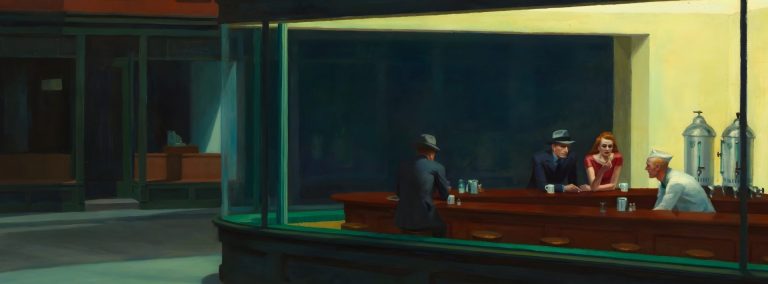
The limits of amplification In an era defined by amplification, the prevailing assumption is that the most effective stories are

Corporate leaders rarely view the arts as a strategic asset. In the United States, arts and culture receive less than

Across the world, there is a renewed appetite for materials, objects, and experiences that feel rooted in place. Consumers and

Public subsidy has long functioned as the stabilizing force in cultural ecosystems. It absorbed volatility, supported fixed costs, and allowed

Cultural organizations spend significant resources improving programs, enhancing quality, and expanding access. Yet participation often falls for a simpler reason.

Cultural enterprises often equate activity with relevance. More exhibitions, more concerts, more panels, more festivals. Yet cognitive science shows that

Cultural organizations often focus on the central moment of delivery. The performance. The exhibition. The screening. Yet behavioral research shows

Many cultural teams treat productivity as a continuous ascent. The expectation is that creative output depends on pushing through until

The demand for immersive, distraction-free cultural experiences is on the rise. Audiences are no longer satisfied with passive attendance; they

The subscription economy is built on recurring payments for continuous access. In cultural institutions, this shifts the focus from ticket

What Is Vibe Coding Vibe coding is a concept in software development popularized by renowned Computer scientist Andrej Karpathy, that

What Is the Artist Corporation The Artist Corporation is a governance model proposed by Kickstarter co-founder Yancey Strickler. It reframes

Defining the Shift In 1999, B. Joseph Pine and James H. Gilmore introduced the concept of the “Experience Economy.” They

Decisions, Once Removed This concept describes a leadership practice where, instead of answering a specific question, you create a clear

The Provocative Operation is a creativity method introduced by Edward de Bono that encourages the deliberate use of provocative or

What Framing Means In behavioral psychology, the framing effect describes how the same information, presented in different ways, produces different

In a few sentences, what does impact mean in the context of your work? It is interesting to reflect on

Defining the Field The UN World Tourism Organization defines cultural tourism as travel driven by cultural attractions — heritage sites,

Defining Talkability In crowded media environments, visibility is insufficient. The measure of success is whether culture remains part of conversation
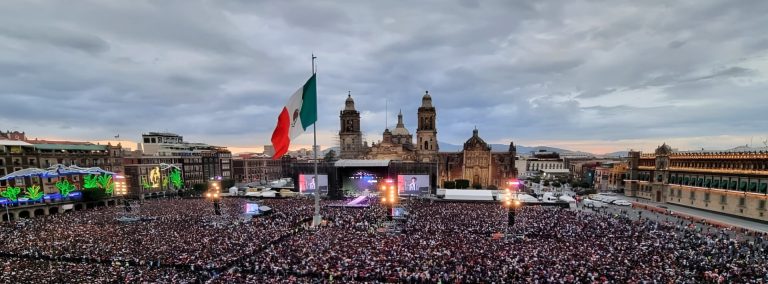
Defining Trigger Cities In the streaming era, cultural influence is no longer concentrated in New York, London, or Paris. Platforms

The future is intergenerational, experience-rich, and longer than ever before. Cultural organizations that continue to ignore the 50+ audience aren’t

Creative block is not confined to the artist’s studio. It is just as present in leadership circles, curatorial boards, and

Most organizations, no matter the sector, drift into familiar grooves. Decisions get easier when everyone agrees. Risks feel safer when
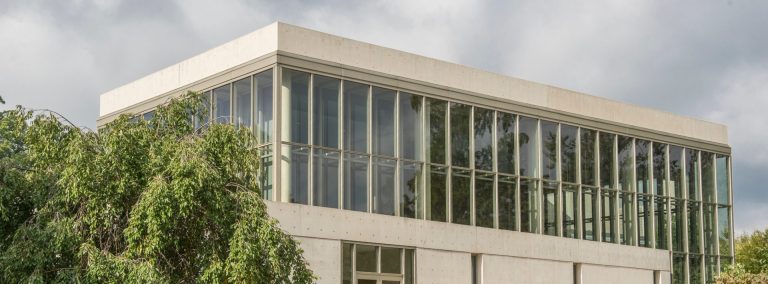
In a few sentences, what does impact mean in the context of your work? Impact at a music school like

For decades, cultural organizations have measured success by attendance: tickets sold and feet through the door. Yet as audience behavior