How has your career evolved, and how did you arrive at innovation in artistic programming?
For over eight years, I’ve been part of the programming team at the Los Angeles Philharmonic. There, I’ve reaffirmed that innovation doesn’t always mean creating something from scratch — it often means transforming what already exists: redesigning formats, reaching new audiences, and amplifying diverse voices. My work is guided by a clear intention: to make decisions that align with my identity, with what music means to me, and with its potential to transform lives. I deeply believe that music, beyond entertainment, can build community, heal, and connect people.

How does a season operate, and what does your day-to-day look like within that context?
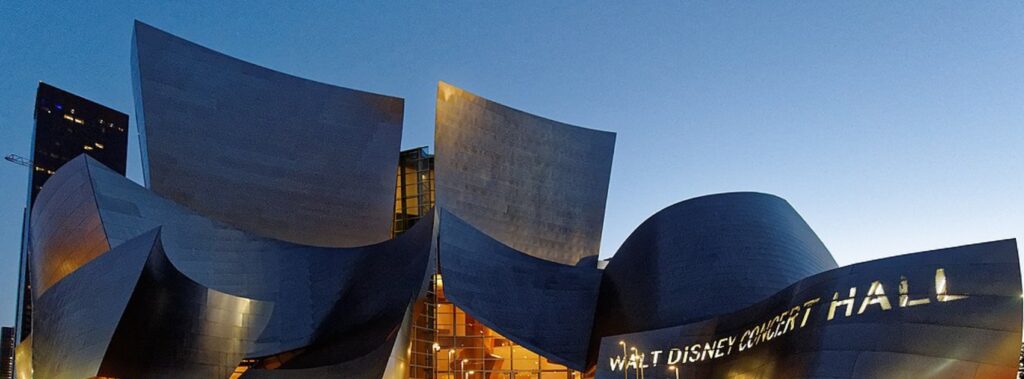
My daily routine shifts depending on the time of year. For example, we just started the Hollywood Bowl season, which is emotional, strategic and operational intense activity. Immediately after this season is over, we move into programming at the Ford and Walt Disney Concert Hall which are smaller in scale but require the same level of artistic and logistical preparation.
At the same time, we’re already projecting into the future. Since early in the year, we begin shaping the upcoming summer season; a process that involves constant listening, research, attending concerts, and exploring new ideas. It’s a simultaneous effort: managing the present while designing what’s next.
In collaboration with the classical programming colleagues, we focus on curating proposals that explore a range of genres and formats such as when the Philharmonic works with artists like Natalia Lafourcade, Cafe Tacvba, Ricky Martin, Christina Aguilera amongst others.
A key part of my role is identifying which artists are best suited to each venue taking into account the relevance of their artistic message within the current environment in which we are building the season. That’s how we build the curatorial puzzle, piece by piece.
In this context, innovation means understanding our surroundings, staying attuned to what’s happening in the city, the country and the world, and responding with creative, meaningful proposals. Sometimes that means inviting local collectives, acclaimed and developing national and international artists, reimagining the format of a concert, or creating new experiences with limited resources. Other times, it means knowing when to step aside; when an artistic proposal already carries its own power, our role is to support, not direct.
This institution (with more than a century of history) has been a true school for me. I arrived with tools and a clear vision, but the experience here has profoundly transformed how I understand music and its capacity to connect, move, and shape reality.

Can you share concrete examples of innovative initiatives you’ve led?
In collaboration with The Ford’s director, Cynthia Fuentes, we also developed Pan América Hoy, led by Gustavo Dudamel, a series that brought together artists from across the continent and embraced collaborative models, accessible pricing, and diverse programming. The guiding question was simple: How can we create authentic cultural impact while reaching new audiences? In this case, innovation was present in both the curatorial approach and the access strategy.
One of the most revealing moments was our first free post-pandemic concert, with The Marías, CONTRA-TIEMPO and YOLA. Seeing the community (especially Latinx audiences) reconnect, dress up, and travel long distances to attend reminded me that a concert is much more than music: it’s a social ritual, a gathering, and a space for emotional healing.
Something similar happened during Noche de Cumbia. Watching older Latina women dance was deeply moving, as I still consider it an act of female autonomy and freedom. In that celebration of the body, memory, and sense of belonging, I realized that some concerts serve a vital purpose: to connect, heal, and empower. Not to mention the recent Fuerza Regida concert at the Hollywood Bowl, where strength and resilience were honored through music, a collective imagination grounded in solidarity, connection, and hope during times of fear and uncertainty.
My supervisor, Johanna Rees, once said something that stuck with me: “We’re not here to gatekeep artists, but to amplify their messages.” That gave me tremendous clarity. Everyone here (from the audience to the artists) brings their own perspectives: revolutionary, feminist, human. Part of my job is to make space for those voices to exist.
What is your perspective on the organization’s community impact?
Though I’m not directly involved, programs like YOLA (Youth Orchestra Los Angeles) reflect the most human side of our institution. Through music education, professional mentorship, and access to new opportunities, YOLA transforms lives. Seeing young people who started there now working within our venues is incredibly inspiring; it reminds me that music, as it did in my own life, can change destinies.

How do you balance creativity, social impact, and financial sustainability?
For us, innovation also means creating sustainable models that strengthen the cultural ecosystem without relying solely on big names or large budgets.
About LA PHIL

For over a century, the LA Phil has been as vibrant as Los Angeles, one of the world’s most open and dynamic cities. Under the leadership of Music & Artistic Director Gustavo Dudamel, it presents nearly 300 events per year, harnessing the transformative power of live music to build community, foster intellectual and artistic growth, and nurture the creative spirit, while redefining what an orchestra can be.
About Rafael Mariño

Rafael is a cultural sector professional with over a decade of experience in production, programming, and artistic management, specializing in Latin music and its intersection with cultural identity. His career began from a deep, personal connection to music, not as a performer, but as a passionate observer of its transformative power.He studied Sound Engineering and later pursued formal studies in music and administration, which allowed him to develop a hybrid profile that combines artistic sensitivity with an operational mindset. He has worked with renowned bands such as La Santa Cecilia and Diamante Eléctrico, which gave him the opportunity to travel across Latin America, understand the social impact of music, and strengthen his identity as a Latino.He is currently part of the programming team at the Los Angeles Philharmonic, where he has led projects at venues such as the Hollywood Bowl and the Ford Theatre. His curatorial approach is rooted in the alignment of identity, purpose, and community, always guided by the conviction that music not only entertains, it transforms.