

DON’T BET THE FARM | How the riskiest assumption test protects creatives

Creative projects often require months of work before audiences encounter the result. Exhibitions are produced, performances rehearsed, albums recorded, and artistic concepts fully developed before anyone knows whether the idea truly resonates. When the response is weak, the investment has already been made. Innovation teams in technology have confronted this challenge for years. Their response […]
IYKYK | The art of letting people in

Neuroscience shows that recognition produces cognitive reward. When a person detects a hidden pattern, identifies a recurring motif, or grasps a structural connection, the brain registers prediction confirmation. Dopaminergic pathways linked to learning and reinforcement are activated. Effort converts into satisfaction. Experiences that require interpretation are remembered longer and valued more highly. Behavioral research confirms […]
PLAYFUL DISSONANCE | Why bending the rules of art on purpose is strategic
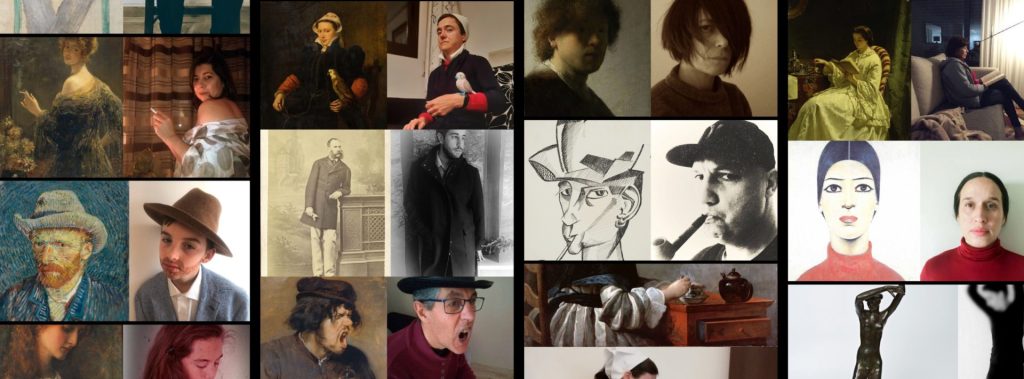
Cultural institutions rarely struggle with invisibility. They struggle with predictability. Audiences carry stable mental models about what a museum, theatre, or symphony orchestra is supposed to feel like. Serious. Canonical. Authoritative. These mental models, or schemas, shape expectations before a visitor ever engages with the work itself. When institutions behave exactly as expected, those schemas […]
FAN-OUT | When audiences become the medium

Arbitrage, in its original financial sense, describes the capture of value created by structural differences between markets. In communications, a similar dynamic occurs when institutions generate reach by leveraging resources they do not directly purchase, particularly the networks and credibility of their audiences. Cultural institutions have traditionally acquired attention through advertising, media placements, and announcements. […]
PORTFOLIO MINDSET | Creative careers are no longer linear

More than one-third of today’s workforce operates in freelance or independent structures. In creative fields, the number is significantly higher. Most artists now combine multiple income streams: commissions, teaching, digital platforms, collaborations, grants, consulting. The single-track career is no longer the norm. It is the exception. For decades, success followed a predictable script. Choose a […]
SMALL BETS | is scale inherently overrated in the arts?

Cultural strategy often rewards visibility. Major exhibitions, new buildings, flagship commissions. These moves signal ambition and attract attention. They also concentrate risk, slow decision-making, and lock institutions into paths that are difficult to revise once evidence begins to emerge. Most durable change in cultural organizations rarely starts this way. It takes shape through repeated decisions […]
Ripple EFFECT | can arts find new life in second-order impact?

Most cultural strategies are optimized for first-order outcomes: attendance, revenue, engagement. These metrics are visible, reportable, and necessary. They are also incomplete. They tell us who attended, not what changed. The most durable value created by cultural organizations emerges later, often beyond the institution’s boundaries. It shows up as shifts in urban dynamics, education pathways, […]
RETROFIT | why is culture hitting rewind?

Nostalgia is often treated as a stylistic trend, but neuroscience reveals a deeper dynamic. Studies show that nostalgic memories enhance emotional regulation, strengthen social bonding, reduce anxiety, and enhance meaning-making. In moments marked by digital saturation and uncertainty, people seek the familiar to feel grounded. This shift is influencing how audiences choose cultural experiences. The […]
EFFICIENCY MIRAGE | why do frontline arts cuts keep failing?

Organizations often optimize for what they can measure. Cost savings are clear. Operational efficiencies are easy to document. Human presence, emotional reassurance, and trust-building are not. When leaders undervalue what they cannot quantify, they eliminate roles that hold the experience together. Behavioral economists describe this as a predictable error. In cultural settings, it can be […]
ARTS CAPITAL | is creativity the foundation of future-proof work?

Young people are entering a world shaped by rapid technological change and shifting models of work. Yet most education and workforce systems still treat the arts as optional. This view no longer aligns with evidence. The World Economic Forum identifies creativity, analytical thinking, collaboration, and adaptability as top skills for 2030. These are precisely the […]