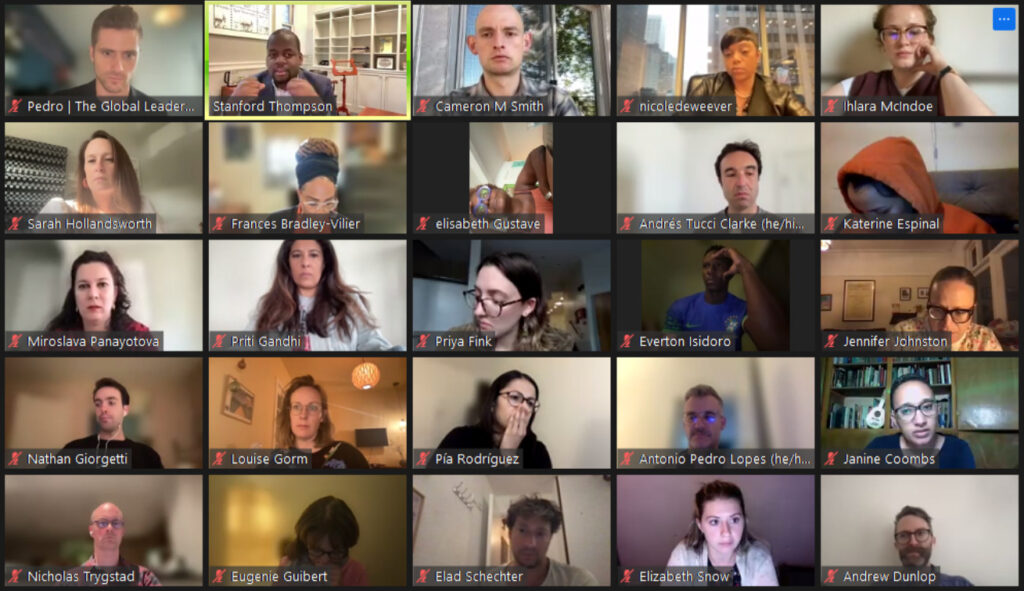
In the first semester of the Arts Innovation MBA, GLI fellows work in teams with creative impact organizations worldwide. These enterprises become Case Study subjects that help GLI fellows learn and practice the tools and frameworks taught in the classroom. Through this process, GLI fellows help Case Study partners to think creatively about their business models and improve them.
As the starting point in the Frameworks for Advocacy and Action module, GLI fellow teams work with Leaders-In-Residence organizations to apply the Logic Model framework to their Case Study partners. The Logic Model is a tool that helps to plan and evaluate initiatives by showing their goals, activities, and impact. GLI fellows research and interview their Case Study partners and then present their findings as a Logic Model.
To create a good Logic Model, module director Stanford Thompson gives the following tips:
- Don’t just look for problems; look for opportunities. Logic models can show how to take advantage of new or existing opportunities, not just how to solve problems. This is especially useful for more established organizations that want to grow or innovate.
- Show the value of a new approach. Logic models should build on the lessons learned from previous leaders and initiatives: what worked well, what didn’t, and what needs to change or improve.
- Know the target community well. Logic models should show how the initiative will help the target community and why it fits them well. This is important to keep the beneficiaries, funders, and partners interested and involved.
- Use early indicators to track progress. Logic models should include metrics that can show if the initiative is going in the right direction from the start and allow for adjustments if needed.
- Plan for challenges and risks. Logic models should map out the resources available to the initiative and how they can be used to overcome economic, social, and cultural barriers.
- Compare cost with impact. Logic models should reveal how efficiently the enterprise uses funds to achieve social results. They can also demonstrate how the enterprise diversifies its income sources to increase spending power and reduce risk.
How have you used the Logic Model framework to design and evaluate creative impact initiatives? Let us know how.